This balsamic vinaigrette dressing recipe gives you a fresh, tangy, slightly sweet dressing in just minutes. It uses pantry staples, tastes brighter than bottled dressing, and works on everything from simple salads to grain bowls and roasted vegetables. Readers who enjoy homemade dressing options like Greek yogurt ranch or Avocado lime dressing will love how flexible this one is.
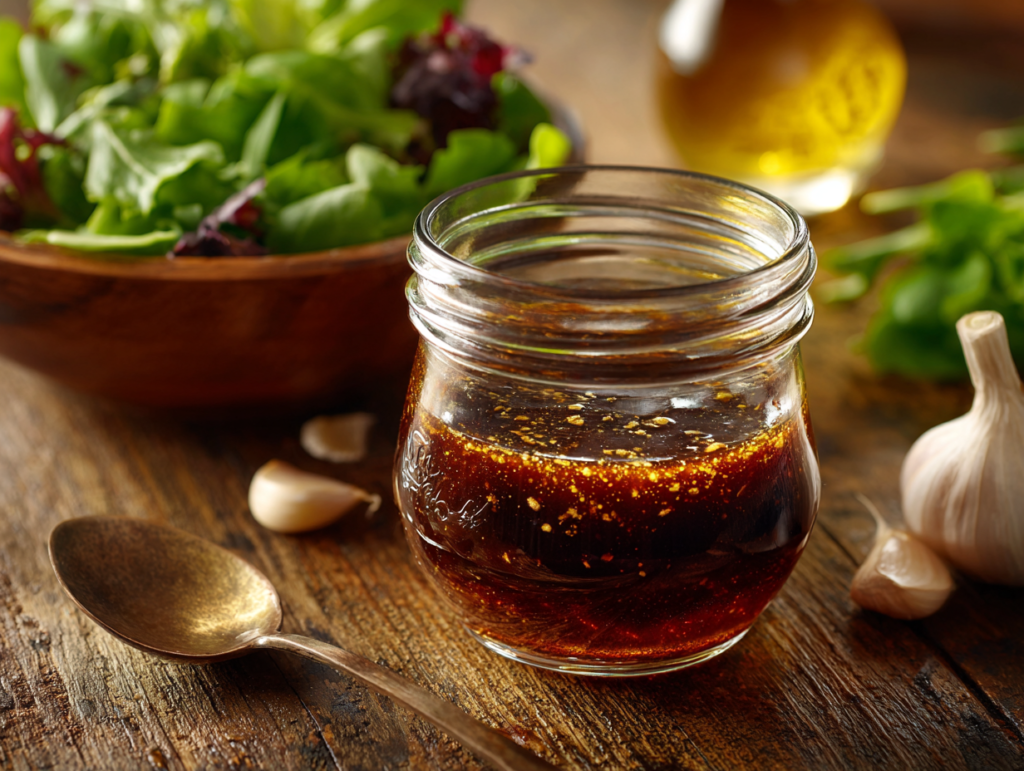
Table of Contents
Table of Contents
Why you’ll love this recipe
- It takes about 5 minutes from start to finish.
- You only need a bowl or jar and a few pantry staples.
- The flavor tastes balanced, fresh, and better than most store-bought bottles.
- You can adjust the sweetness, tang, and garlic to fit your taste.
- It works for salads, chicken marinades, roasted vegetables, and meal prep bowls.
- It keeps well in the fridge, so you can make it ahead.
- It suits beginner cooks because the method is simple and forgiving.
What this tastes like
This dressing tastes bright, tangy, smooth, and lightly sweet with a gentle kick from Dijon and garlic. Olive oil softens the acidity, while balsamic vinegar adds depth and a little natural sweetness.
It fits quick weeknight salads, lunch meal prep, holiday side salads, and simple dinners when you want something lighter but still flavorful. If you like sweet and tangy homemade dressings, Honey mustard dressing and Orange vinaigrette are also great flavor directions to explore.
Ingredients
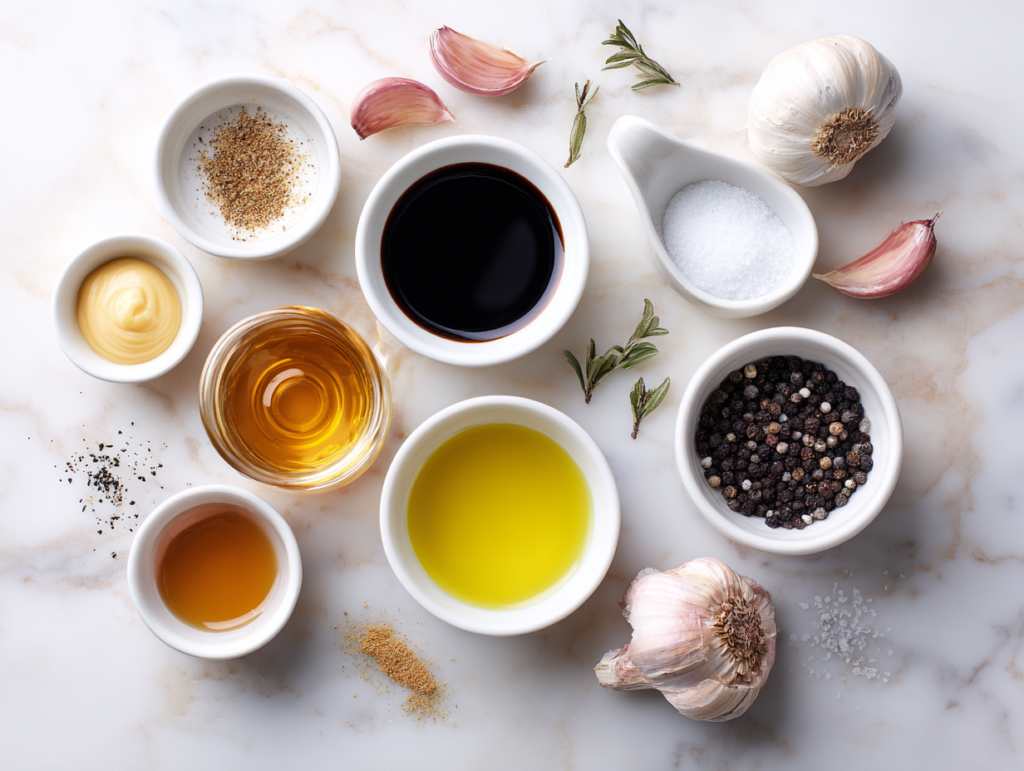
- 1/4 cup balsamic vinegar
- 3/4 cup extra-virgin olive oil
- 1 tablespoon Dijon mustard
- 1 tablespoon honey
- 1 small garlic clove, finely grated or minced
- 1/2 teaspoon kosher salt
- 1/4 teaspoon black pepper
- 1 tablespoon water, optional, for a lighter texture
Substitutions & swaps
- Use maple syrup instead of honey for a vegan version.
- Use shallot instead of garlic for a milder, slightly sweeter bite.
- Swap Dijon for whole grain mustard if you want more texture.
- Use avocado oil instead of olive oil for a more neutral finish.
- Add 1 teaspoon lemon juice if you want extra brightness.
- Reduce the honey to 1 teaspoon for a less sweet dressing.
Best ingredients to use
- Extra-virgin olive oil: It gives the dressing body and a rich, peppery finish. The American Heart Association offers useful guidance on olive oil nutrition.
- Good balsamic vinegar: A smoother vinegar makes a smoother dressing.
- Dijon mustard: It helps emulsify the vinaigrette, so the oil and vinegar stay blended longer.
Equipment
- Small mixing bowl or mason jar
- Whisk or fork
- Measuring cups and spoons
- Microplane or knife for the garlic
- Jar with lid for storage
How to make Balsamic Vinaigrette Dressing Recipe
Prep
- Measure everything first. Add the balsamic vinegar, Dijon mustard, honey, garlic, salt, and black pepper to a small bowl or jar. This takes about 2 minutes and makes mixing easier.
- Start with the base before the oil. Whisk the vinegar, mustard, honey, and seasonings until the honey dissolves and the mixture looks smooth. This step helps the dressing emulsify better.
Cook
- No cooking is needed. Slowly drizzle in the olive oil while whisking constantly. If you use a jar, pour in the oil, close the lid tightly, and shake for 20 to 30 seconds.
- Watch the texture. The dressing should look glossy and lightly thickened, not separated into clear layers right away.
- Adjust if needed. Taste with a lettuce leaf, not a spoon. Add a pinch more salt if it tastes flat, another teaspoon of honey if it tastes too sharp, or 1 tablespoon water if it feels too heavy.
Finish & serve
- Let it sit for 5 minutes so the garlic and mustard settle into the dressing.
- Serve right away over greens, tomatoes, cucumbers, grain bowls, or roasted vegetables.
- Avoid a common mistake: do not add all the oil at once if you whisk by hand. Slow mixing creates a better texture.
- Another mistake to avoid: do not oversalt before tasting it on salad. Greens often need less salt in the dressing than you think.
Pro tips
- Use a 3:1 oil-to-vinegar ratio for a classic balanced vinaigrette.
- Taste the dressing on lettuce, not alone, because straight vinaigrette tastes sharper by itself.
- Grate the garlic very finely so it blends in instead of leaving harsh chunks.
- Warm the honey for a few seconds if it feels too thick to mix smoothly.
- Shake the jar again before serving because homemade dressing naturally settles.
- Add water one teaspoon at a time if the dressing feels too strong.
- If it tastes too acidic, add a little more honey or oil.
- If it tastes too oily, add 1 to 2 teaspoons more balsamic vinegar.
- If it tastes too salty, whisk in more oil and a little vinegar to rebalance it.
- If the dressing splits, whisk in 1 teaspoon Dijon mustard or 1 teaspoon warm water.
- Keep raw garlic light. Too much garlic can overpower delicate greens.
- Chill it after mixing for meal prep, but let it sit at room temperature for 10 minutes before serving if the oil firms up.
Variations
- Budget version: Use regular olive oil and skip the garlic for a simpler pantry dressing.
- Healthier tweak: Reduce oil to 1/2 cup and add 2 tablespoons water for a lighter dressing.
- High-protein pairing idea: Serve it over a salad with grilled chicken, tuna, or chickpeas.
- Spicy version: Add 1/4 teaspoon red pepper flakes or a small pinch of cayenne.
- Herb version: Add 1 teaspoon chopped basil, oregano, or parsley.
- Creamy version: Whisk in 1 tablespoon Greek yogurt for a softer tang.
- Citrus version: Add 1 teaspoon lemon juice or orange juice.
- Shallot version: Replace garlic with 1 tablespoon minced shallot.
- Maple version: Swap honey for maple syrup for a deeper sweetness.
- For readers who enjoy classic creamy salads too, Healthy Caesar dressing offers a richer option, while Low sodium Caesar helps when you want tighter control over salt.
Serving ideas
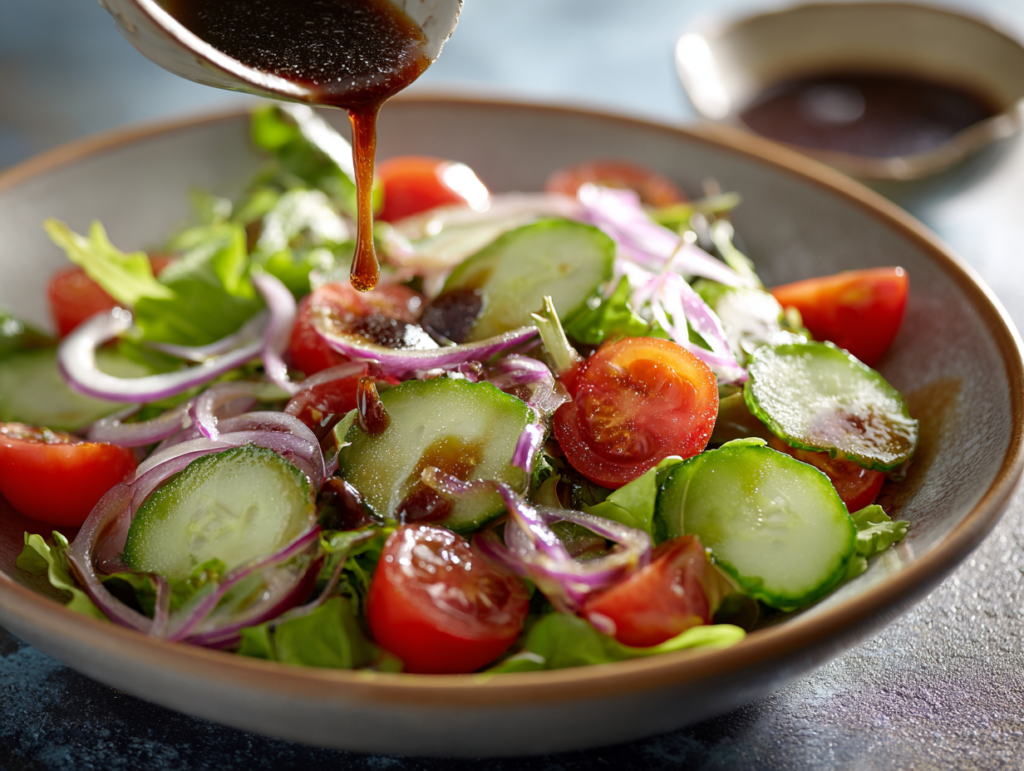
- Toss it with mixed greens, cucumber, tomatoes, and red onion.
- Drizzle it over arugula with strawberries and goat cheese.
- Spoon it onto roasted carrots, Brussels sprouts, or asparagus.
- Use it as a quick marinade for chicken or portobello mushrooms.
- Add it to quinoa bowls with chickpeas and chopped vegetables.
- Serve it over a tomato mozzarella salad.
- Drizzle it on a side salad with pasta, grilled fish, or soup.
- Pair it with crusty bread and sparkling water for a simple lunch spread.
- Use it in lunch containers for meal prep salads.
- Try it over a chopped salad with avocado and grilled corn.
Storage, freezing, reheating
Store the dressing in a sealed jar in the refrigerator for up to 1 week. Shake well before each use.
Do not freeze it. The texture turns uneven after thawing.
You do not need to reheat it, but cold olive oil can firm up in the fridge. Let the jar sit at room temperature for 10 to 15 minutes, then shake again.
For make-ahead prep, mix the dressing up to 5 days in advance. Keep salad greens separate until serving so they stay crisp.
Nutrition (estimates)
Per serving, based on 8 servings:
- Calories: 115
- Protein: 0 g
- Carbs: 2 g
- Fat: 12 g
Nutrition values are estimates and change based on the exact vinegar, oil, and sweetener you use.
FAQs
What is balsamic vinaigrette dressing made of?
A classic balsamic vinaigrette usually contains balsamic vinegar, olive oil, mustard, and seasonings like salt, pepper, and garlic. Many versions also include honey or maple syrup to soften the tang.
The exact balance changes from recipe to recipe, but the base stays simple. This version keeps the flavor clean and versatile.
Is balsamic vinaigrette healthy?
It can fit well into a balanced diet because it uses olive oil and simple ingredients. Homemade dressing also lets you control the salt, sweetness, and portion size.
That said, it still contains oil, so the calories add up quickly. Use enough to coat your salad, not soak it.
Is vinaigrette good for kidney disease?
That depends on the ingredients and your specific nutrition guidance. A homemade vinaigrette can work better than bottled dressing because you can control the sodium.
For a kidney-friendly version, reduce the salt and avoid high-sodium add-ins. The National Institute of Diabetes and Digestive and Kidney Diseases shares practical kidney-friendly eating tips that can help you tailor dressings and meals more carefully.
What salad dressing can diabetics have?
Many people with diabetes do well with dressings that have lower added sugar and balanced portions. Homemade vinaigrettes often work well because you control the ingredients.
This dressing uses only a small amount of honey. You can reduce it further or swap it with a lower-sugar option if that suits your meal plan. For broader meal ideas, the American Diabetes Association provides helpful diabetes meal planning guidance.
Why does my vinaigrette separate so fast?
Oil and vinegar naturally separate over time. That is normal for homemade dressing.
Mustard helps hold it together longer, but you still need to whisk or shake it again before serving.
Can I make this without mustard?
Yes, but the texture will separate faster and the flavor will lose a little depth. You can replace Dijon with a small spoonful of Greek yogurt for some body, though the dressing will taste different.
If you skip mustard entirely, shake the jar right before serving.
Can I use white balsamic instead?
Yes. White balsamic gives a milder, lighter flavor and a paler color. It works especially well on delicate greens or fruit salads.
The dressing will taste a little less rich, but still fresh and balanced.
How long does homemade balsamic vinaigrette last?
It usually keeps well in the fridge for up to 1 week in a sealed container. Fresh garlic shortens the shelf life slightly, so keep it chilled and use a clean spoon each time.
Discard it if the smell changes or the flavor tastes off.
What is the best oil for balsamic vinaigrette?
Extra-virgin olive oil is the best choice for flavor and texture. It gives the dressing a fuller taste and classic vinaigrette finish.
If you want a milder profile, use avocado oil or a light olive oil.
Can I use this as a marinade?
Yes. It works well for chicken, mushrooms, zucchini, and other vegetables. The vinegar adds flavor while the oil helps coat the food evenly.
For meat, marinate in the fridge and follow safe food-handling practices. Discard used marinade unless you boil it separately before using it as a sauce.
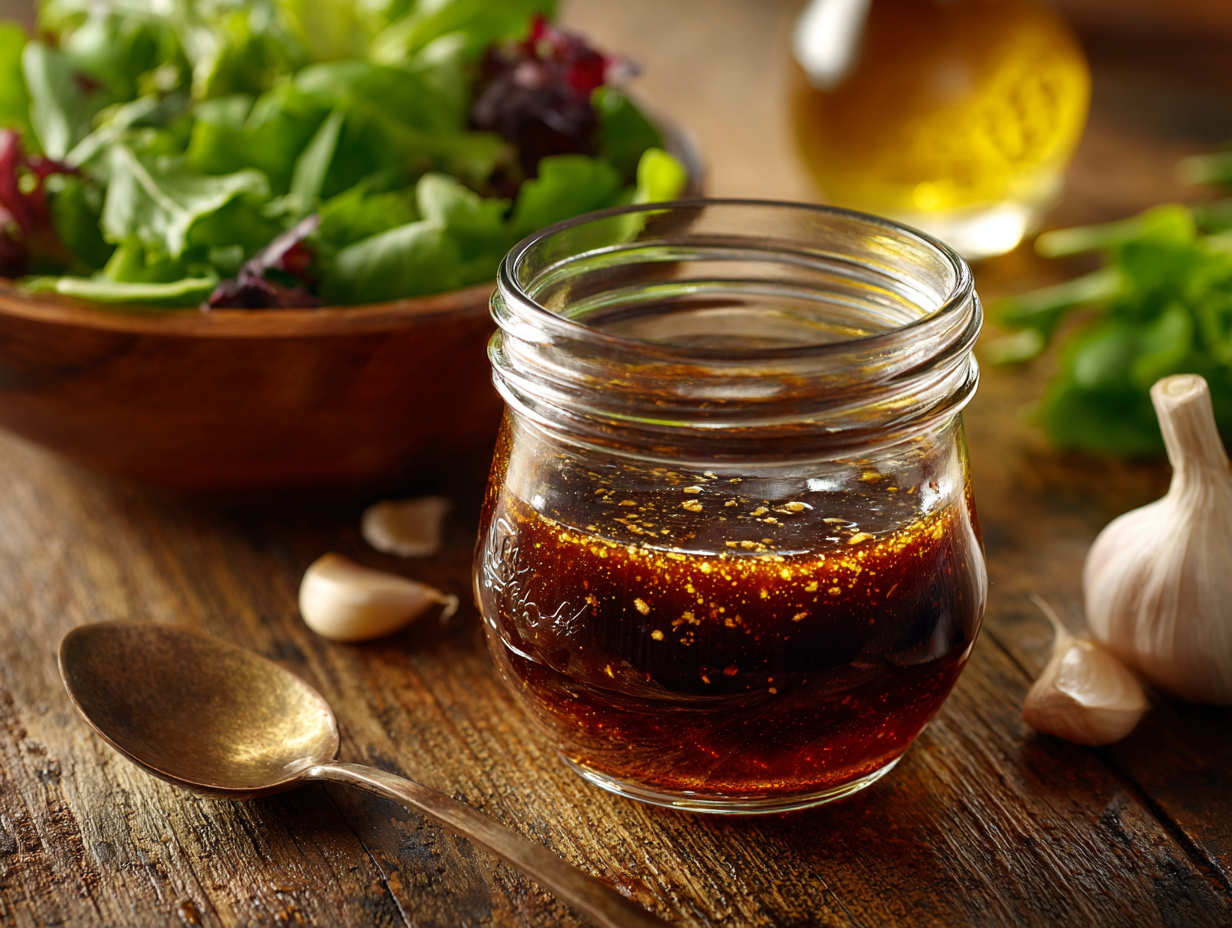

Balsamic Vinaigrette Dressing
Ingredients
Equipment
Method
- Add the balsamic vinegar, Dijon mustard, honey, garlic, salt, and black pepper to a bowl or jar.
- Whisk until smooth and fully combined.
- Slowly drizzle in the olive oil while whisking constantly, or seal the jar and shake vigorously for 20 to 30 seconds.
- Taste and adjust with more honey, salt, vinegar, or a little water if needed.
- Let the dressing rest for 5 minutes, then serve or refrigerate.