
I first started making beef veggie stir fry noodles when I missed the rush of my grandmother’s kitchen in Marrakesh but needed something fast in my San Diego life. Back then, she cooked by sound and smell, so I learned to trust the sizzle more than the clock. Now, when I crave a bold dinner that uses whatever vegetables I have, I reach for beef veggie stir fry noodles.
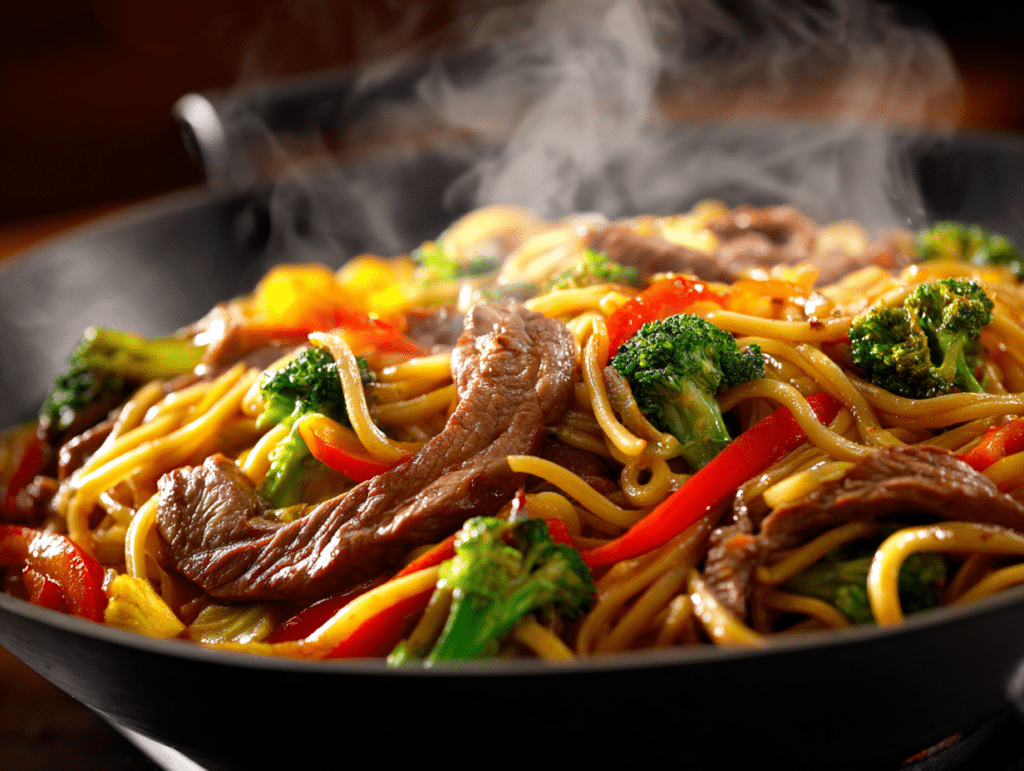
It feels comforting, it cooks quickly, and it welcomes little twists. In this article, you’ll learn the flavor formula, the best ingredient swaps, and the simple order that keeps beef tender and noodles glossy every time.
Table of Contents
Table of Contents
The story behind my beef veggie stir fry noodles
A Marrakesh memory in a hot pan
My name is Samiya El Khoury. I was born in Marrakesh, Morocco, and I now live in San Diego, California. Growing up, I watched my grandmother cook with cumin, saffron, and cinnamon in the air, and she always moved with purpose. So, when I started building my own weeknight routine in the U.S., I wanted the same confident rhythm.
One night, I had thin-sliced beef, a bell pepper, and a half bag of snap peas. I also had garlic, ginger, and a spoon of chili paste. I heated my pan until it almost smoked, then I cooked the beef in a quick, noisy sear. Next, I pushed it aside, tossed in vegetables, and finished with noodles and sauce. Because I kept the heat high and the steps tight, dinner tasted bright instead of heavy. Since then, beef veggie stir fry noodles has stayed on repeat in my kitchen.
When I want a simpler beef-and-veg baseline before noodles, I use the same timing ideas from my beef broccoli recipe, because it trains your eye for tender beef and crisp greens.
What makes this dish taste “restaurant-good” at home
First, you need the right cut and slice. Then, you need the right order. After that, you need a sauce that balances salty, sweet, and acid.
Use this quick flavor checklist:
- Salty: low-sodium soy sauce or tamari
- Sweet: brown sugar or honey
- Acid: rice vinegar or lime juice
- Heat: chili garlic sauce, harissa, or red pepper flakes
- Aromatics: garlic + ginger (always)
Also, cook in batches when your pan looks crowded. Otherwise, beef steams and turns chewy. For another “noodle texture” reference point, the method in egg noodle stir-fry shows how noodles stay springy when you toss them at the end instead of boiling them to death.
Ingredients and smart swaps for beef veggie stir fry noodles
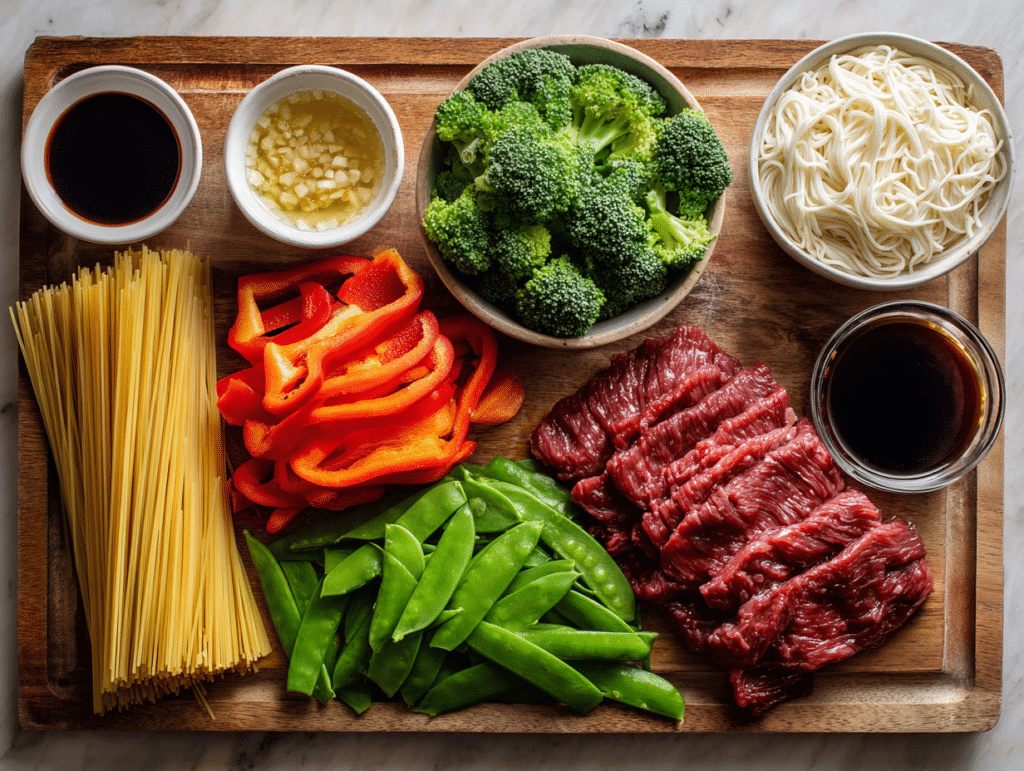
The core ingredient list you actually need
This list keeps beef veggie stir fry noodles simple, flexible, and flavorful.
Protein
- Flank steak, sirloin, or ribeye (thin sliced)
- Optional: egg for extra richness
Vegetables
- Broccoli florets
- Bell pepper
- Carrots (matchstick cut)
- Snap peas or green beans
- Scallions
Noodles
- Lo mein noodles, udon, rice noodles, or spaghetti in a pinch
Sauce
- Soy sauce (or tamari)
- Oyster sauce (optional, adds depth)
- Brown sugar or honey
- Rice vinegar
- Sesame oil
- Cornstarch (for cling)
- Garlic + ginger
Quick prep list (so you don’t panic mid-cook)
- Slice beef across the grain
- Cut vegetables into similar sizes
- Mix sauce in a bowl
- Boil noodles until just tender, then rinse quickly
If you love garlic-forward noodles, you can borrow flavor cues from crispy garlic noodles and tone the garlic up without overpowering the sauce.
Substitutions that still taste right
Sometimes your pantry decides the menu. So, use this swap table and keep moving.
| If you don’t have… | Use this instead | Result |
|---|---|---|
| Flank steak | Sirloin, skirt steak, or thin beef strips | Tender bite if sliced thin |
| Soy sauce | Tamari (gluten-free) or coconut aminos | Similar salt, slightly sweeter with aminos |
| Oyster sauce | Hoisin + extra soy (small amount) | Sweeter, still savory |
| Rice vinegar | Lime juice or apple cider vinegar | Bright finish |
| Cornstarch | Arrowroot powder | Same glossy sauce |
For buttery comfort noodles on nights you want less sauce, the technique from garlic butter noodles can guide your noodle finish, then you can add quick stir-fry beef on top.
Step-by-step beef veggie stir fry noodles method
The best order for tender beef and crisp vegetables
This order keeps beef veggie stir fry noodles fast and clean.
Before you start
- Use a wok or a large skillet.
- Keep everything within reach.
- Heat the pan first, then add oil.
Sauce mix (stir in a bowl)
- 1/4 cup soy sauce
- 1 1/2 tbsp brown sugar
- 1 tbsp rice vinegar
- 1 tbsp oyster sauce (optional)
- 1 tsp sesame oil
- 2 tsp cornstarch
- 2 cloves garlic, minced
- 1 tsp grated ginger
- Chili to taste
Now cook in this exact sequence:
- Sear the beef (hot pan, quick browning)
- Stir-fry firm vegetables (broccoli, carrots)
- Add quick-cooking vegetables (snap peas, peppers)
- Toss in noodles + sauce (coat, then serve)
Also, if you want a sesame-ginger direction, the flavor approach in sesame ginger translates perfectly to beef and noodles.
Cooking steps (simple cues so you know it’s right)
Follow these steps and listen for the sizzle.
Ingredients (serves 4)
- 12 oz noodles (lo mein, udon, or rice noodles)
- 1 lb flank steak or sirloin, thin sliced
- 2 tbsp neutral oil (avocado or canola)
- 3 cups mixed vegetables (broccoli, bell pepper, carrots, snap peas)
- 2 cloves garlic, minced
- 1 tsp ginger, grated
- Sauce (from above)
- Optional: toasted sesame seeds, sliced scallions, lime wedges
Steps
- Cook noodles until just tender. Drain them, rinse quickly, then toss with a few drops of oil so they don’t stick.
- Sear the beef. Heat the pan until very hot, add oil, then add beef in a single layer. Cook 60–90 seconds, then stir and cook 30–60 seconds more. Move beef to a plate. For safe cooking guidance, reference the safe minimum internal temperature chart when you want a clear target.
- Cook vegetables. Add a small splash of oil, then stir-fry carrots and broccoli for 2 minutes. Next, add peppers and snap peas for 1–2 minutes.
- Add aromatics. Stir in garlic and ginger for 20 seconds, then keep stirring so they don’t burn.
- Combine and glaze. Return beef to the pan, add noodles, then pour in sauce. Toss for 60–90 seconds until everything looks glossy and coated.
- Finish and serve. Add scallions, sesame seeds, and a squeeze of lime.
For a stronger garlic kick without extra work, you can borrow the finishing vibe from vietnamese garlic and add a touch more butter and garlic right at the end.
If you want a technique refresher on ingredient order and “sauce goes last,” Colorado State University Extension shares clear guidance in their stir-fry success tips.
Serving, storage, and make-ahead tips for beef veggie stir fry noodles
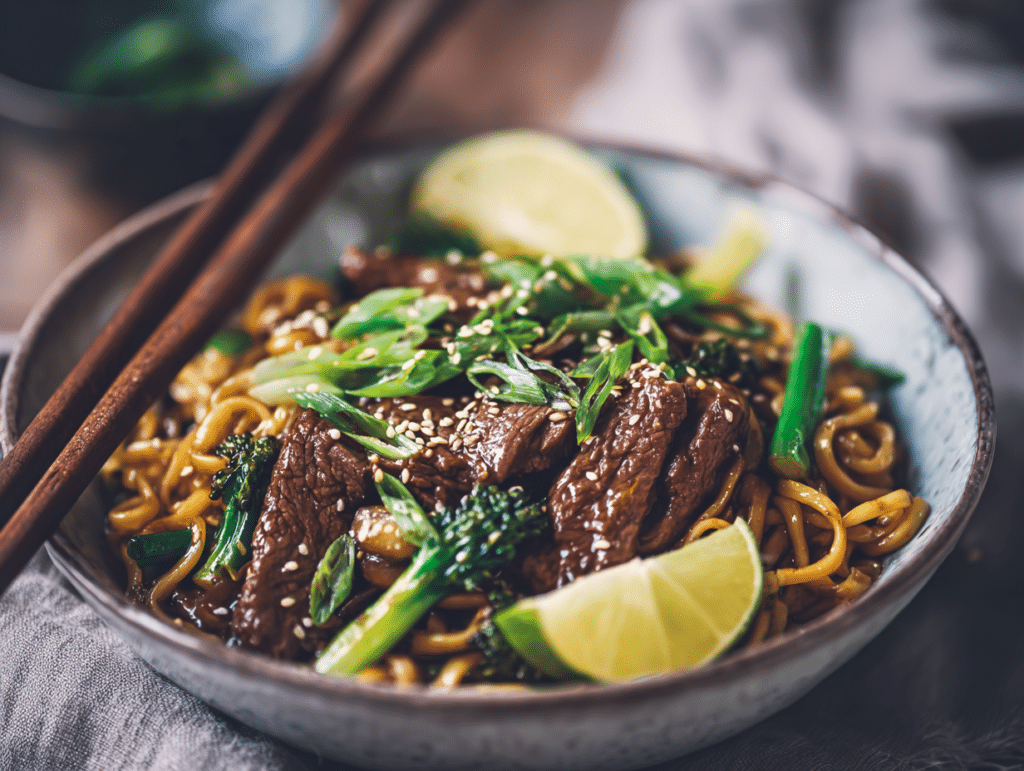
Serving ideas that keep it fresh
Because beef veggie stir fry noodles already hits protein, vegetables, and carbs, you can serve it as a full meal. Still, small toppings change the whole bowl.
Easy serving upgrades
- Add cucumber ribbons for crunch
- Top with a fried egg
- Sprinkle toasted peanuts or cashews
- Add fresh herbs (cilantro or basil)
- Finish with lime zest for brightness
If you like sticky, glossy noodle bowls, the sauce finish in sticky garlic inspires a slightly thicker glaze that clings to every strand.
Storage and reheating that keeps noodles from turning soft
Store beef veggie stir fry noodles in airtight containers, and chill it quickly. Then reheat it the right way.
Storage rules
- Refrigerate within 2 hours.
- Keep leftovers for 3–4 days.
- Freeze up to 2 months for best texture.
Reheating tips
- Reheat in a skillet with a splash of water to loosen sauce.
- Stir often, and keep heat medium-high.
- Add fresh scallions after reheating for a brighter bite.
For official leftover safety guidance, this USDA food safety page explains timing and storage clearly: leftovers and food safety.
For a quick side that uses similar flavors, a simple bowl like veggie fried rice works well when you want extra food for guests.
FAQs about beef veggie stir fry noodles
What cut of beef works best for beef veggie stir fry noodles?
Flank steak and sirloin work best because they slice thin and cook quickly. Also, slice across the grain so each bite stays tender.
How do I stop noodles from getting soggy?
Cook noodles just to tender, then rinse quickly. Next, toss them in sauce only at the end, and keep the pan hot so sauce coats instead of pooling.
Can I make beef veggie stir fry noodles gluten-free?
Yes. Use tamari instead of soy sauce, then choose rice noodles. Also, check oyster sauce labels or skip it and add a little more tamari plus a pinch of sugar.
Can I meal prep beef veggie stir fry noodles?
Yes. Cook beef and vegetables, then store noodles separately when possible. After that, reheat everything together in a skillet with a splash of water to bring back the glossy finish.
Conclusion
When you cook beef veggie stir fry noodles with high heat, smart slicing, and the right order, you get a bowl that tastes bold, fresh, and satisfying. More importantly, you gain a flexible method you can repeat with whatever vegetables you have. Cook boldly, trust your taste, and make it yours.
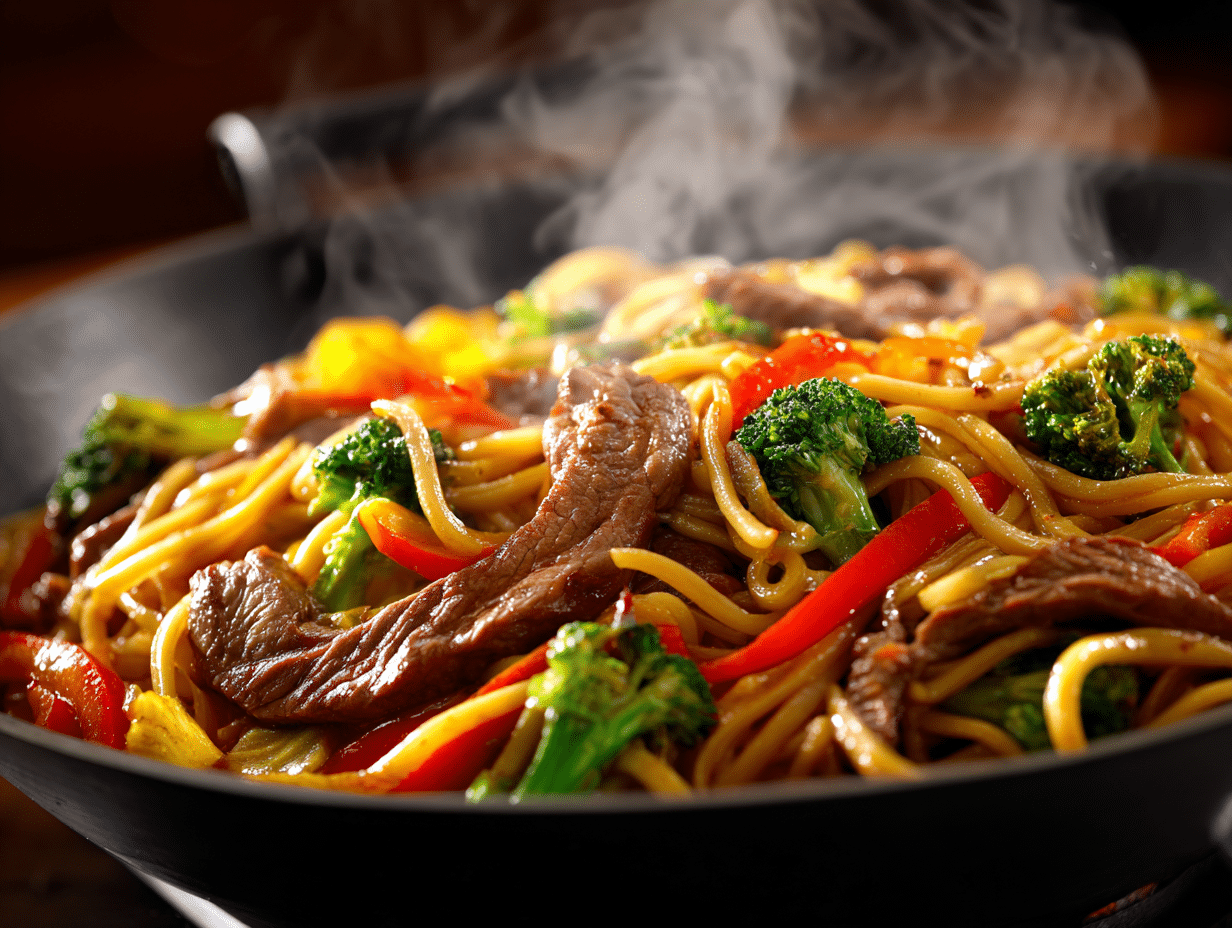

Beef Veggie Stir Fry Noodles
Ingredients
Equipment
Method
- Cook noodles until just tender. Drain, rinse quickly, and toss with a few drops of oil.
- Heat a large skillet or wok over high heat. Add 1 tbsp oil, then sear beef in a single layer for 60–90 seconds. Stir and cook 30–60 seconds more. Move beef to a plate.
- Add remaining oil. Stir-fry carrots and broccoli for 2 minutes, then add peppers and snap peas for 1–2 minutes.
- Stir in garlic and ginger for 20 seconds.
- Whisk soy sauce, vinegar, sugar, oyster sauce (optional), sesame oil, and cornstarch. Add beef back to pan, add noodles, then pour in sauce.
- Toss 60–90 seconds until glossy and coated. Top with scallions and sesame seeds, then serve hot.