
There’s something quietly comforting about a bowl of Japanese onion soup. With its clear, delicate broth infused with onions, mushrooms, and a hint of ginger, this simple starter is often the first thing that welcomes you at Japanese restaurants. It’s light yet full of flavor—a soothing prelude to a hibachi meal or sushi spread. In this guide, you’ll discover the story behind its origins, how to make it perfectly at home, the flavor secrets that give it that unmistakable umami depth, and a few healthy twists to make it your own. Let’s bring restaurant comfort straight to your kitchen.
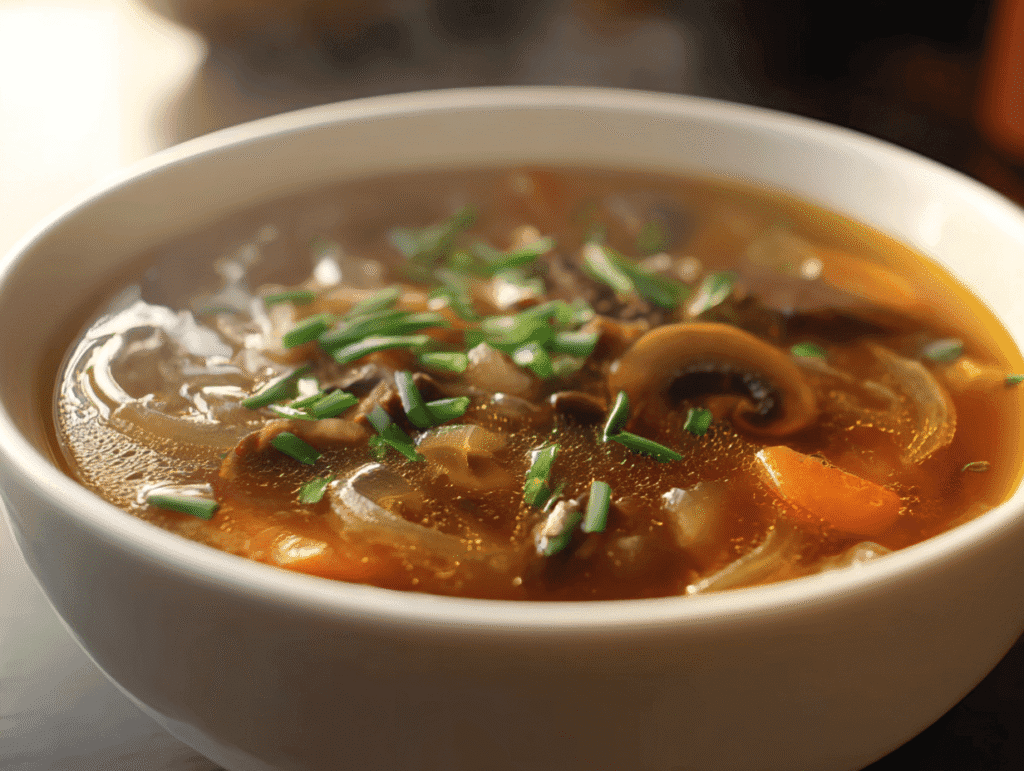
Table of Contents
Table of Contents
The Story Behind Japanese Onion Soup (and Why It’s So Beloved)
A Memory from My Moroccan-American Kitchen
I still remember the first time I tasted Japanese onion soup. I had just moved to San Diego, far from the spices and slow-simmered stews of my grandmother’s kitchen in Marrakesh. One evening, a friend invited me to a small hibachi restaurant. The waiter placed a delicate bowl in front of me—clear broth, a few floating mushrooms, and the light scent of ginger rising with the steam. One sip, and I felt instant calm. The flavor was pure, balanced, and soothing in a way that felt like home, even thousands of miles away.
That first taste stayed with me. When I tried recreating it at home, I discovered the beauty of its simplicity—just onions, mushrooms, ginger, and a mild broth. It reminded me that comfort food doesn’t need to be rich or heavy. Sometimes, it’s about clarity, both in flavor and in spirit. That’s what I love most about Japanese onion soup—it teaches patience, mindfulness, and appreciation for the small things simmering quietly on the stove.
When I first tasted Japanese onion soup, it reminded me of the simple, rustic comfort of dishes like my Old-Fashioned Homemade Vegetable Soup. Both share that same sense of warmth and nostalgia in every spoonful.
What Makes Japanese Onion Soup Unique?
Unlike Western onion soups, which are thick, sweet, and often covered with cheese, Japanese onion soup takes the opposite path. It’s light, clean, and deeply savory without being overwhelming. The secret lies in the balance of gentle ingredients—ginger for warmth, mushrooms for umami, and onions for sweetness. Every spoonful feels like a whisper rather than a shout.
It’s more than a restaurant appetizer; it’s a reminder of calm. This humble soup captures the essence of Japanese cooking—respect for ingredients, harmony in flavor, and the quiet power of simplicity. One bowl can turn an ordinary evening into something peaceful and grounding.
I often think of it alongside my Cozy Potato Leek Soup Without Cream — another bowl that proves true flavor doesn’t need to be heavy or complex.
How to Make Japanese Onion Soup at Home (Step-by-Step Guide)
Simple Ingredients, Deep Flavor
What I love most about Japanese onion soup is how effortlessly it comes together with just a handful of ingredients. There’s nothing fancy here—just fresh vegetables, a touch of broth, and time. The secret is balance. Each element plays a small role in creating that soothing umami taste that makes the soup unforgettable.
When preparing Japanese onion soup, balance and timing make all the difference. If you love protein-rich comfort dishes, you might also enjoy my High Protein Chicken Noodle Soup, which builds flavor the same slow, satisfying way.
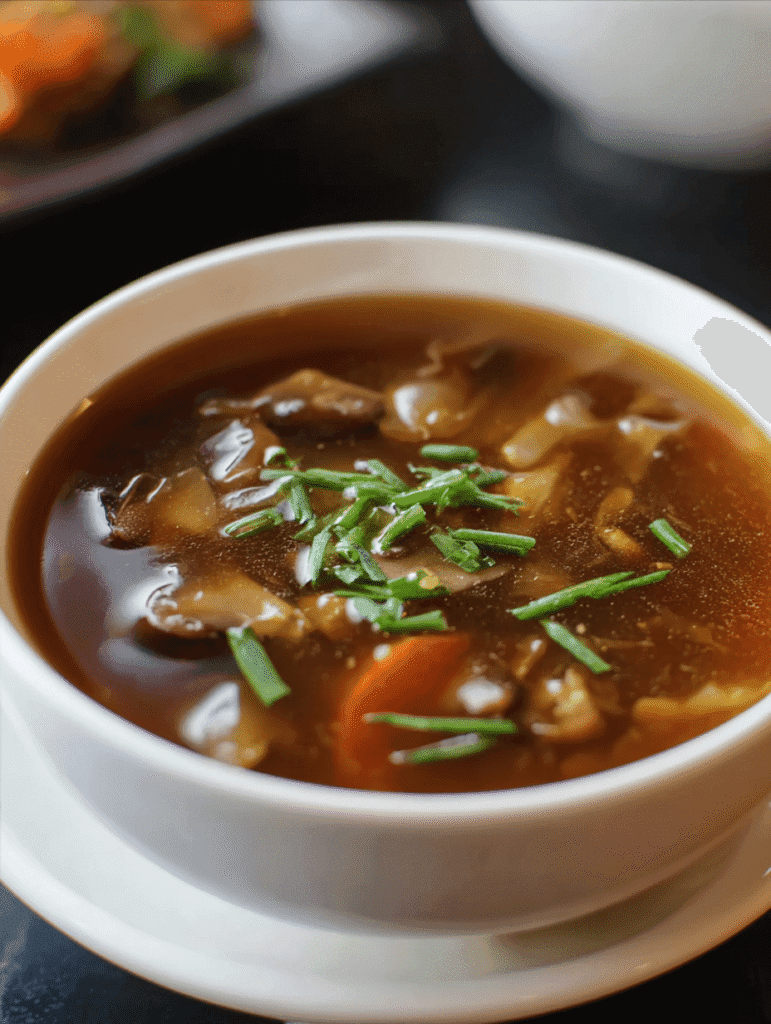
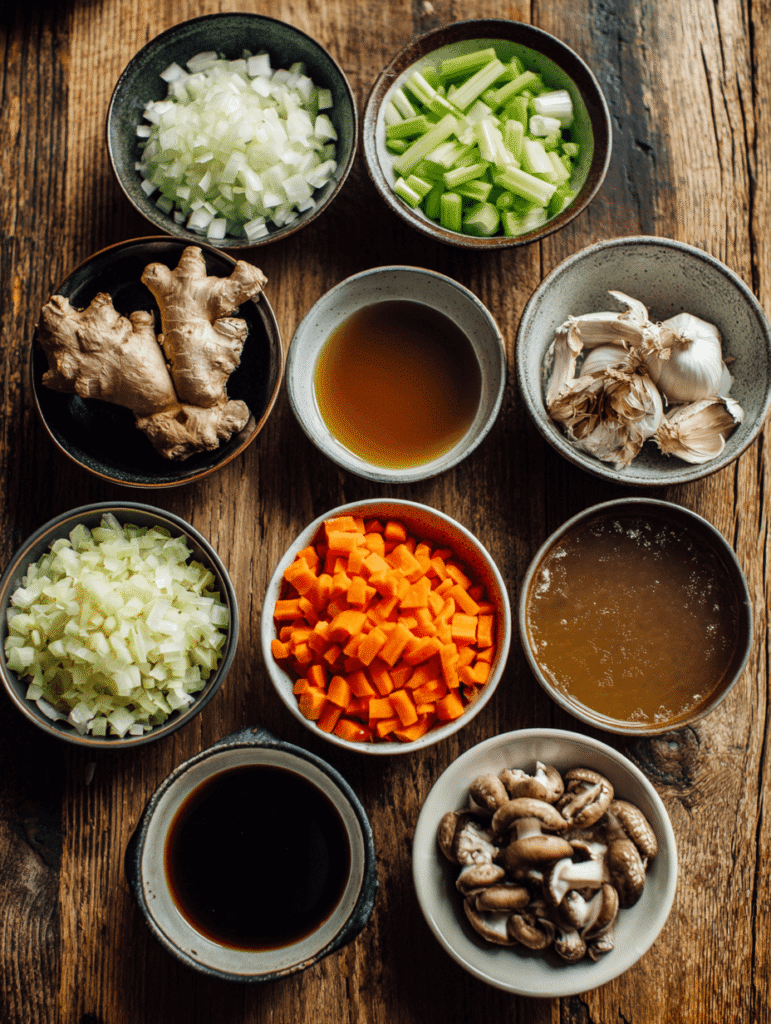
Here’s what you’ll need for six servings:
| Ingredient | Amount |
|---|---|
| Celery (chopped) | ½ stalk |
| Onion (chopped) | 1 small |
| Carrot (chopped) | ½ |
| Fresh ginger (grated) | 1 teaspoon |
| Garlic (minced) | ¼ teaspoon |
| Chicken stock | 2 tablespoons |
| Beef bouillon granules | 3 teaspoons |
| Fresh shiitake mushrooms (chopped) | 1 cup |
| Baby portobello mushrooms (sliced) | 1 cup |
| Water | 2 quarts |
| Fresh chives (minced) | 1 tablespoon |
Cooking Steps That Bring Out Umami
Start by combining the celery, onion, carrot, ginger, garlic, and a handful of mushrooms in a large pot. Pour in the chicken stock, beef bouillon, and water. Bring it to a boil, then cover and simmer on medium heat for about 45 minutes. This slow simmering is what draws out all the rich, earthy flavor.
When the broth is ready, strain it over another pot filled with your remaining mushrooms. The heat will gently cook them, adding a final layer of umami. Discard the strained vegetables—they’ve already given their best to the broth. Ladle the soup into small bowls and top with minced chives for color and freshness.
Each spoonful of Japanese onion soup delivers the same light, comforting warmth you’d expect from a fine hibachi meal—only now, it’s made right in your own kitchen.
For a vegetarian twist, I often take inspiration from my Easy Lentil Soup Recipe. It shows how plant-based broths can still deliver bold, layered umami just like this Japanese classic.
Flavor Secrets and Creative Twists
The Art of Umami — Japanese Balance in Every Sip
The secret to a truly memorable Japanese onion soup lies in umami — that deep, savory richness that lingers long after the last spoonful. Every element plays a part in creating that harmony. The mushrooms bring earthiness, onions add sweetness, and a hint of ginger gives warmth. Together, they form a broth that feels balanced and grounding.
To deepen the umami flavor, you can add a dash of soy sauce or a splash of mirin, the sweet Japanese rice wine that enhances the broth’s complexity. A few drops of toasted sesame oil right before serving also create a fragrant, nutty aroma that elevates the soup without overpowering it.
If you prefer a plant-based version, swap chicken stock for vegetable broth and skip the beef bouillon. The mushrooms will still deliver plenty of richness on their own. For a touch of spice, a pinch of chili oil adds a pleasant heat that pairs beautifully with the delicate onion base. The beauty of Japanese onion soup is that it invites creativity while staying true to its quiet, comforting essence.
If you love experimenting with new ingredients, try playing with sweet or earthy undertones like in my Butternut Squash and Apple Soup. Its balance of fruit and vegetable sweetness mirrors the quiet depth of Japanese onion soup.
Modern Variations — From Hibachi to Home Comfort
What’s wonderful about this soup is how adaptable it is. Some people add soft tofu cubes or a few strands of seaweed for a traditional Japanese twist. Others like to introduce Western influences — a handful of wilted spinach, for instance, or thin slices of green onion for freshness.
Serve it before a hearty meal, or enjoy it as a light dinner with steamed rice or sushi on the side. It’s versatile enough to complement anything, yet satisfying enough to stand alone. Whether you’re making it for guests or for yourself on a quiet evening, Japanese onion soup offers the perfect mix of simplicity, warmth, and flavor harmony.
For a bolder, spiced alternative, I often turn to my Mulligatawny Soup Recipe. Its use of curry and aromatics shows how easily global flavors can inspire new takes on a traditional Japanese broth.
Serving, Storage & Nutrition Benefits
How to Serve It the Japanese Way
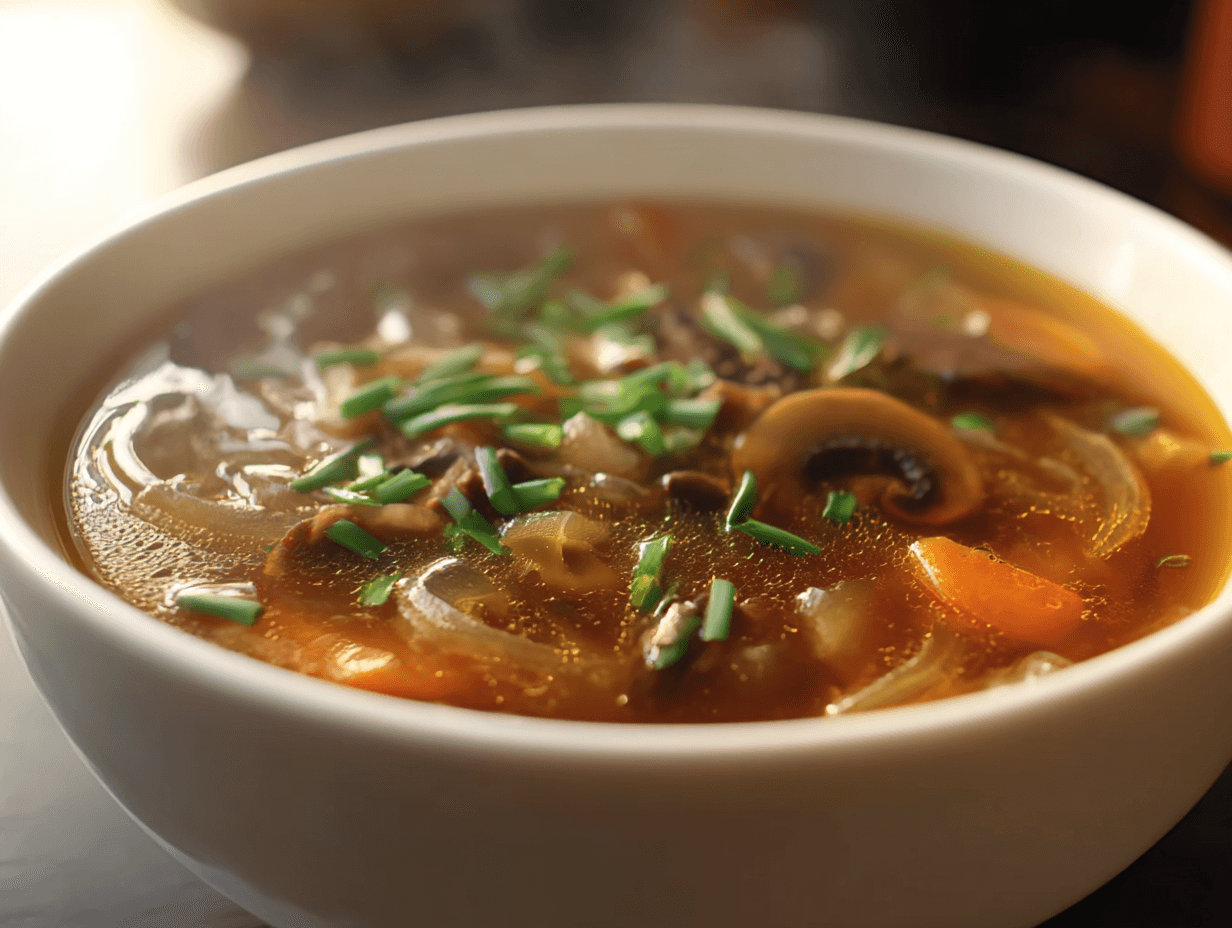
Presentation matters just as much as flavor in Japanese cooking. Japanese onion soup is traditionally served in small porcelain bowls, with finely sliced scallions or chives sprinkled on top. The clear, amber broth and floating mushrooms make it look as elegant as it tastes. For an authentic touch, use Asian soup spoons and serve it warm — never boiling hot — so that each sip reveals the broth’s delicate balance.
If you want to recreate a true hibachi experience at home, pair your soup with grilled chicken, shrimp, or steak. A small side of white rice or crisp cucumber salad complements the soup’s mild, savory notes perfectly. For a vegetarian spread, tofu and steamed edamame make wonderful partners. No matter how you serve it, this soup brings comfort to the table and serenity to the senses.
I love how easily Japanese onion soup fits into a healthy routine. When I batch-cook, I follow the same methods I use for my Freezer-Friendly Gut-Healthy Soup Recipes, ensuring the flavor stays vibrant even after freezing.
Health and Nutritional Value
One of the best things about Japanese onion soup is how light it is. It’s low in calories and fat but rich in flavor and nutrients. The broth hydrates, the vegetables provide vitamins, and the ginger and garlic lend natural anti-inflammatory benefits. It’s the kind of meal that feels restorative rather than heavy.
Here’s a quick snapshot of its nutritional profile per serving:
| Nutrient | Amount (per serving) |
|---|---|
| Calories | 25 |
| Sodium | 258 mg |
| Protein | 1 g |
| Fat | 0 g |
| Carbohydrates | 4 g |
You can refrigerate leftover soup for up to three days in a sealed container or freeze it for longer. When reheating, warm it gently to preserve the clean, balanced flavor. Whether you’re sipping it before dinner or savoring it as a light lunch, Japanese onion soup proves that simplicity can be the purest form of nourishment.
And when autumn arrives, I often serve this alongside other seasonal favorites from my Fall Soup Recipes, creating a cozy spread of nourishing, soul-soothing bowls for chilly evenings.
Frequently Asked Questions About Japanese Onion Soup
1. What’s in Japanese onion soup?
Japanese onion soup is made with a clear, flavorful broth that combines onions, mushrooms, carrots, celery, garlic, and ginger. The base usually blends chicken and beef stock for depth, simmered slowly to extract the vegetables’ natural sweetness. Some variations use only vegetable broth, making it just as comforting and light. A sprinkle of chives or scallions adds a fresh finish right before serving.
2. Is Japanese onion soup healthy?
Yes, it’s a very healthy choice. Japanese onion soup is naturally low in fat, cholesterol, and calories, yet rich in nutrients and antioxidants from fresh vegetables. Ginger and garlic also provide immune-boosting and anti-inflammatory benefits. It’s the kind of dish that supports wellness without sacrificing flavor—light enough for a detox meal but satisfying enough to enjoy any time of year.
3. What is the soup that comes with hibachi?
That delicious starter served at hibachi restaurants is Japanese onion soup. It’s a mild, clear broth often served before grilled entrées. The gentle warmth of the soup prepares your palate for the meal ahead while offering a moment of calm before the show at the hibachi grill. Its clean flavor and simplicity make it an essential part of the Japanese dining experience.
4. What is the famous soup in Japan?
The most famous soup in Japan is miso soup, made from fermented soybean paste, seaweed, and tofu. However, Japanese onion soup has gained global popularity for its simplicity and soothing qualities. It’s often seen as a bridge between traditional Japanese flavors and Western comfort food—light, balanced, and easy to make at home.
If you’re new to making clear soups, my Cabbage Roll Soup Recipe offers a similar step-by-step approach to balancing vegetables and broth perfectly.
Japanese Onion Soup — Simplicity, Comfort, and Heart in Every Bowl
Japanese onion soup proves that simplicity can be extraordinary. With just a few humble ingredients, it creates a depth of flavor that feels both soothing and elegant. Whether you serve it as a light start to dinner or savor it on its own, this clear broth embodies calm, balance, and heart. Each spoonful reminds you that food doesn’t need to be complicated to be deeply satisfying. Try making this recipe at home, adjust it to your taste, and let its quiet warmth fill your kitchen. A bowl of comfort is just a simmer away.

Japanese Onion Soup – Simple, Comforting, and Full of Flavor
Ingredients
Equipment
Method
- Combine celery, onion, carrot, ginger, garlic, and a few mushrooms in a large pot.
- Add chicken stock, beef bouillon, and water, then bring to a boil.
- Once boiling, cover and simmer on medium heat for 45 minutes to extract flavors.
- Place remaining mushrooms in a separate pot.
- Strain the broth over the mushrooms to gently cook them.
- Discard solids and serve the broth hot, topped with minced chives.
Nutrition
Notes
Tried this recipe?
Let us know how it was!Follow Taste Bliss Recipes
Love this Japanese onion soup? Stay inspired and discover more comforting recipes!
Find me on Pinterest, Facebook, and Instagram for daily food ideas.
Catch quick tips on X and TikTok, or watch full recipe videos on YouTube.
Good food is meant to be shared—come join my kitchen community!