
This Lemon Herb Vinaigrette is the kind of simple recipe that makes everyday meals taste finished. It is bright, savory, and flexible enough for salads, grain bowls, roasted vegetables, chicken, and fish. You only need a few fresh ingredients and about 10 minutes.
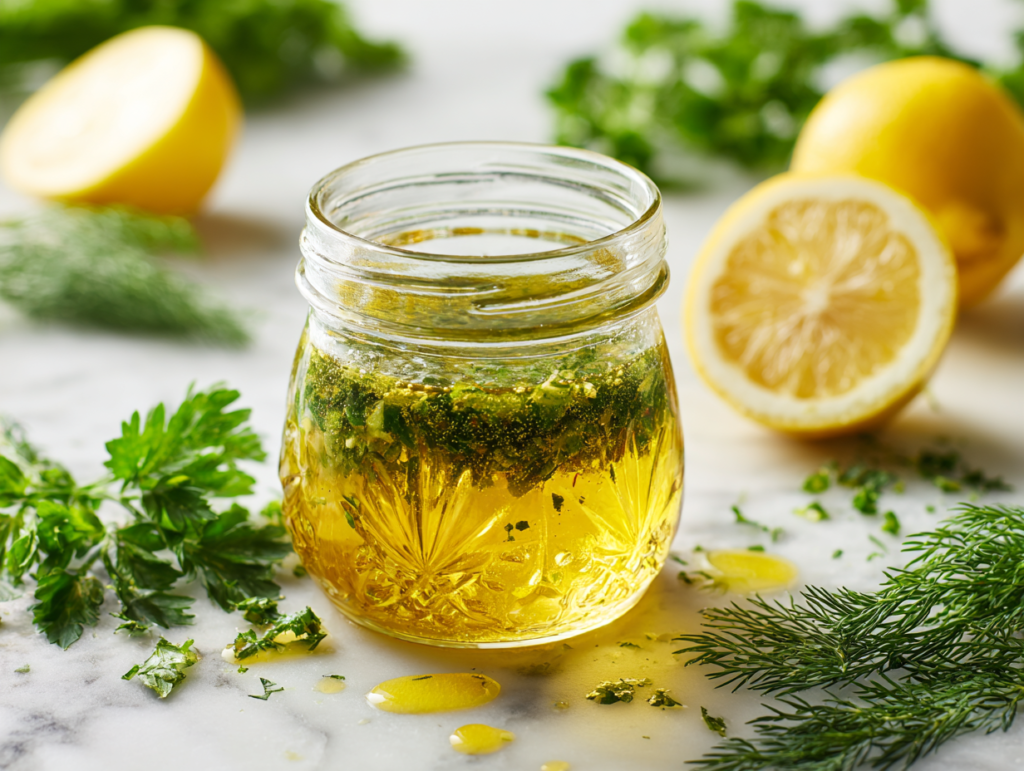
Table of Contents
Table of Contents
Why you’ll love this recipe
- It takes about 10 minutes from start to finish.
- It uses pantry staples plus fresh lemon and herbs.
- It tastes lighter and brighter than many bottled dressings.
- It works on salads, bowls, chicken, seafood, and vegetables.
- It is easy to adjust for sweetness, salt, or acidity.
- It stores well for meal prep.
- It is naturally vegetarian, gluten-free, and dairy-free.
What this tastes like
Lemon Herb Vinaigrette tastes fresh, zippy, and balanced. The lemon brings clean acidity, the olive oil rounds it out, and the herbs add a green, garden-like flavor. Dijon gives it a gentle tang and helps the dressing hold together.
It is ideal for weeknight salads, quick lunches, spring dinners, and simple guest meals. It also works well when you want a lighter dressing than creamy options like avocado lime dressing.
Ingredients
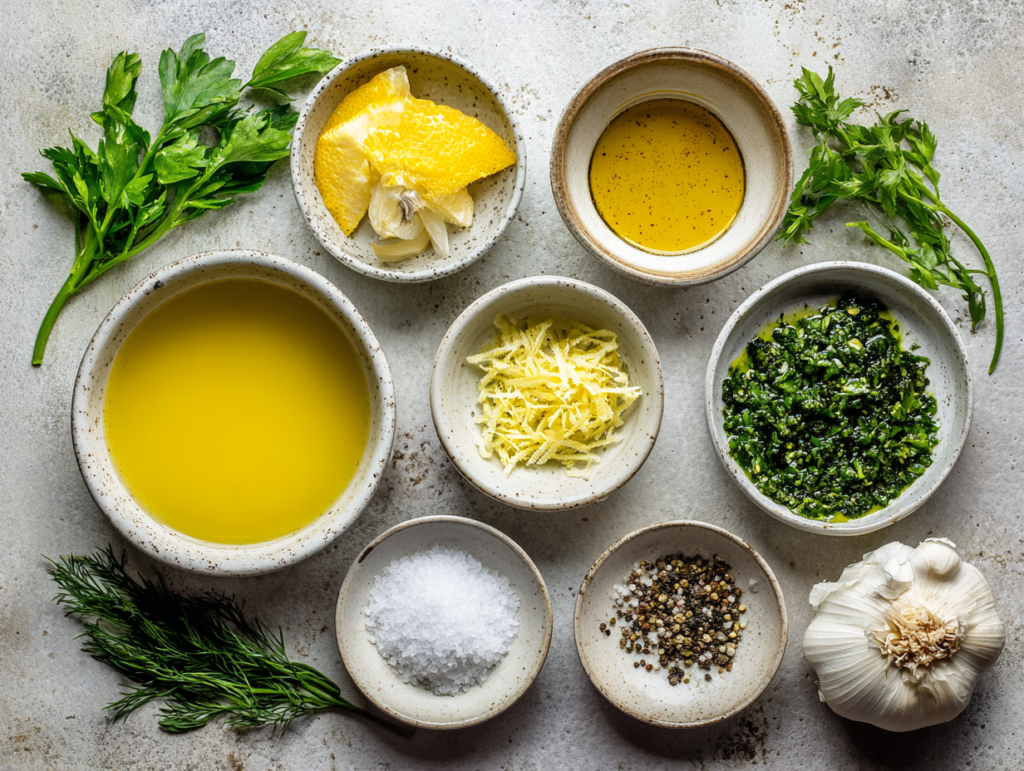
- 1/4 cup fresh lemon juice, from about 2 lemons
- 1 tablespoon lemon zest
- 1/2 cup extra-virgin olive oil
- 1 tablespoon Dijon mustard
- 1 small garlic clove, finely grated
- 1 tablespoon finely chopped fresh parsley
- 1 tablespoon finely chopped fresh basil
- 1 tablespoon finely chopped fresh dill
- 1 teaspoon honey or maple syrup
- 1/2 teaspoon kosher salt, plus more to taste
- 1/4 teaspoon black pepper
- 1 to 2 tablespoons water, as needed to loosen
Substitutions & swaps
- Use maple syrup instead of honey for a vegan version.
- Swap dill for chives or cilantro if that is what you have.
- Use shallot instead of garlic for a softer flavor.
- Replace part of the lemon juice with white wine vinegar for a milder finish.
- Use avocado oil if you want a more neutral oil flavor.
Best ingredients to use
- Use fresh lemon juice, not bottled, for the cleanest flavor.
- Choose a good extra-virgin olive oil because you will taste it.
- Chop herbs finely so the vinaigrette coats evenly instead of feeling leafy.
Equipment
- Small mixing bowl or glass jar
- Whisk or fork
- Microplane or fine grater
- Citrus juicer
- Measuring cups and spoons
- Small spoon for tasting and adjusting
How to make Lemon Herb Vinaigrette
Prep
- Zest the lemons first, then juice them. You need 1/4 cup juice and 1 tablespoon zest.
- Finely chop the parsley, basil, and dill. Grate the garlic on a microplane so it blends smoothly.
- Add the lemon juice, lemon zest, Dijon, garlic, honey, salt, and pepper to a bowl or jar. Whisk until smooth.
Avoid this mistake: Do not add the herbs before dissolving the salt and mustard. The base mixes more evenly first.
Cook
- There is no cooking step, but technique matters. Slowly drizzle in the olive oil while whisking constantly for 30 to 45 seconds. The dressing should look slightly thickened and unified, not oily on top.
- Stir in the chopped herbs. If the vinaigrette looks too thick, whisk in 1 tablespoon water. Add the second tablespoon only if needed.
Visual cue: A good vinaigrette should lightly coat a spoon, then run off in a smooth stream.
Avoid this mistake: If you pour in the oil too fast, the dressing can separate quickly.
Finish & serve
- Taste the dressing with a lettuce leaf or cucumber slice, not just a spoon. That gives you a truer read on the seasoning.
- Add more salt for depth, more lemon for brightness, or a little more honey if it tastes too sharp.
- Serve right away or chill for 15 to 20 minutes so the herb flavor settles into the dressing.
This dressing pairs especially well with Greek chicken bowls and simple fish dishes like lemon dill cod.
Pro tips (to get it perfect)
- Zest the lemon before juicing. It is much easier.
- Start with less salt, then adjust after tasting on actual food.
- Use room-temperature lemon juice and mustard so the dressing blends more smoothly.
- Grate the garlic finely so you do not get harsh raw chunks.
- Whisk the oil in slowly for a better emulsion.
- Add 1 tablespoon water if the dressing feels too intense on delicate greens.
- Let it sit for 10 minutes before serving if you want a rounder flavor.
- Shake or whisk again before serving because homemade vinaigrette naturally settles.
- If it tastes too sour, add 1/2 teaspoon more honey or 1 tablespoon more oil.
- If it tastes flat, add a pinch of salt before adding more lemon.
- If it tastes bitter, the olive oil may be strong; balance it with a touch more honey.
- For food safety, refrigerate promptly and use a clean spoon each time. The FDA refrigeration guidance is a helpful reference for chilled homemade foods.
Variations
- Budget version: Use only parsley instead of a mix of herbs.
- Creamier version: Blend in 1 tablespoon Greek yogurt.
- Vegan version: Use maple syrup instead of honey.
- Spicy version: Add a pinch of red pepper flakes or 1/2 teaspoon chili crisp.
- High-protein meal idea: Serve it over chicken, chickpeas, or white beans rather than changing the dressing itself.
- Garlic-forward version: Add an extra half clove of garlic.
- Milder version: Replace 1 tablespoon lemon juice with water.
- Citrus blend: Swap part of the lemon juice with orange juice for a softer edge, similar to orange vinaigrette.
- No-mustard version: Skip the Dijon and shake extra well before serving.
- Mediterranean twist: Add 1 teaspoon dried oregano and use it on tomato-cucumber salad.
Serving ideas
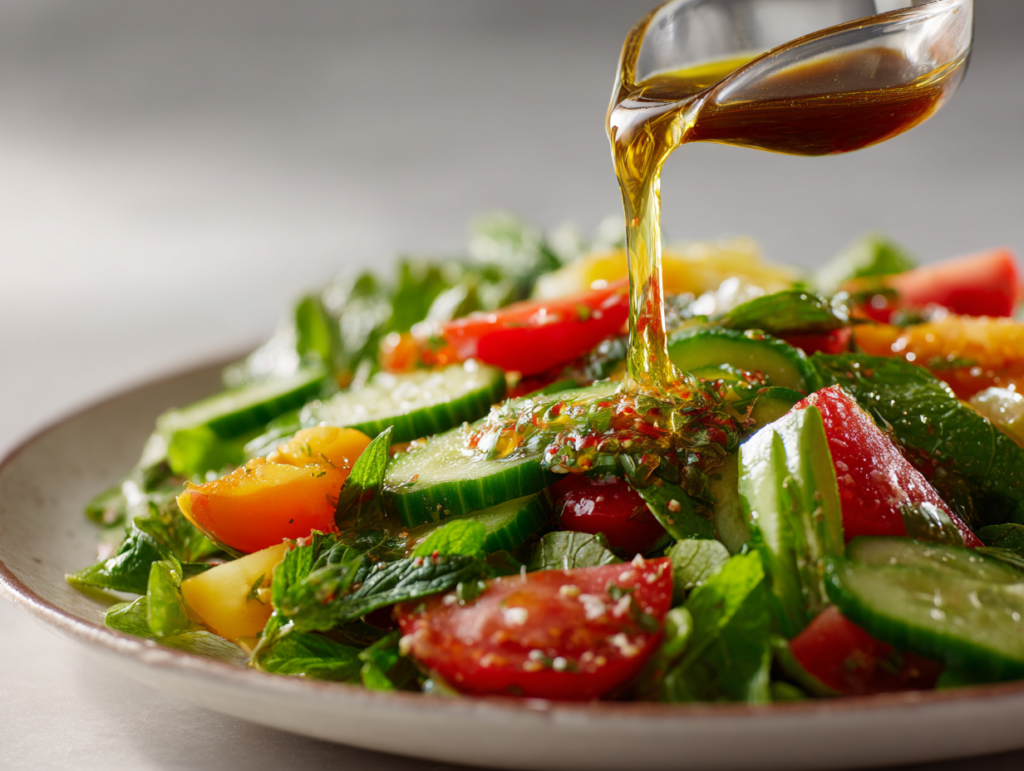
- Toss with romaine, arugula, spinach, or mixed greens.
- Spoon over roasted potatoes, carrots, or asparagus.
- Drizzle over grilled chicken or lemon herb chicken.
- Use it on salmon, cod, or shrimp.
- Dress quinoa bowls, rice bowls, or couscous.
- Stir into white beans or chickpeas for a fast lunch salad.
- Use it as a marinade for chicken for 20 to 30 minutes.
- Spoon over sliced tomatoes and cucumbers.
- Serve with crusty bread and sparkling water with lemon for a light lunch.
- Pair it with a sharper dressing like balsamic vinaigrette when serving a salad board.
Storage, freezing, reheating
Store Lemon Herb Vinaigrette in a sealed jar in the refrigerator for up to 5 days. The olive oil may firm up when cold. Let the jar sit at room temperature for 10 to 15 minutes, then shake well.
Do not freeze it. The texture turns uneven after thawing.
For make-ahead prep, whisk the lemon juice, mustard, garlic, salt, and pepper up to 2 days ahead. Add the oil and herbs the day you plan to serve it for the freshest taste.
Nutrition (estimates)
Per serving, based on 8 servings:
- Calories: 94
- Protein: 0.2g
- Carbs: 1.7g
- Fat: 10g
Nutrition values are estimates and vary by ingredient brand and exact serving size. For ingredient reference data, the USDA FoodData Central database is useful.
FAQs
What is Lemon Herb Vinaigrette made of?
Lemon Herb Vinaigrette is usually made with fresh lemon juice, olive oil, herbs, mustard, garlic, salt, and pepper. Many versions also include a small amount of honey or maple syrup to soften the acidity.
The exact herb mix can change. Parsley, basil, dill, and chives all work well.
How long does homemade Lemon Herb Vinaigrette last?
It keeps well in the refrigerator for about 5 days in a sealed jar. Because it contains fresh lemon juice and herbs, it tastes best in the first 2 to 3 days.
Shake it well before serving because separation is normal.
Can I make Lemon Herb Vinaigrette without Dijon mustard?
Yes. Dijon helps emulsify the dressing and adds a mild tang, but you can leave it out. The vinaigrette will separate faster, so shake or whisk it again before serving.
You can also use a small spoonful of Greek yogurt for body if you want a different stabilizer.
What foods go well with Lemon Herb Vinaigrette?
It goes well with leafy salads, roasted vegetables, chicken, fish, grain bowls, beans, and pasta salad. It is especially good on meals that need brightness.
It also works as a quick finishing sauce for grilled foods.
Why did my vinaigrette separate?
Most vinaigrettes separate over time, so that part is normal. Fast separation usually means the oil went in too quickly or the mustard was skipped.
Whisk slowly while adding the oil, or shake the jar vigorously for 20 seconds.
How do I fix a vinaigrette that tastes too sour?
Add a little more olive oil first. Then taste again. If it still feels sharp, add 1/2 teaspoon honey or maple syrup.
A small pinch of salt can also help round out the flavor.
Can I use dried herbs instead of fresh?
Yes, but the flavor will be less bright. Use about 1 teaspoon dried herbs total for each tablespoon of fresh herbs in the recipe.
Let the dressing sit for 10 to 15 minutes so the dried herbs can soften.
Is this dressing healthy?
It can be a great everyday dressing because it uses simple ingredients and heart-healthy olive oil. The American Heart Association guide to healthy fats explains why oils like olive oil can fit into a balanced diet.
The overall nutrition depends on how much you use and what you serve it with.
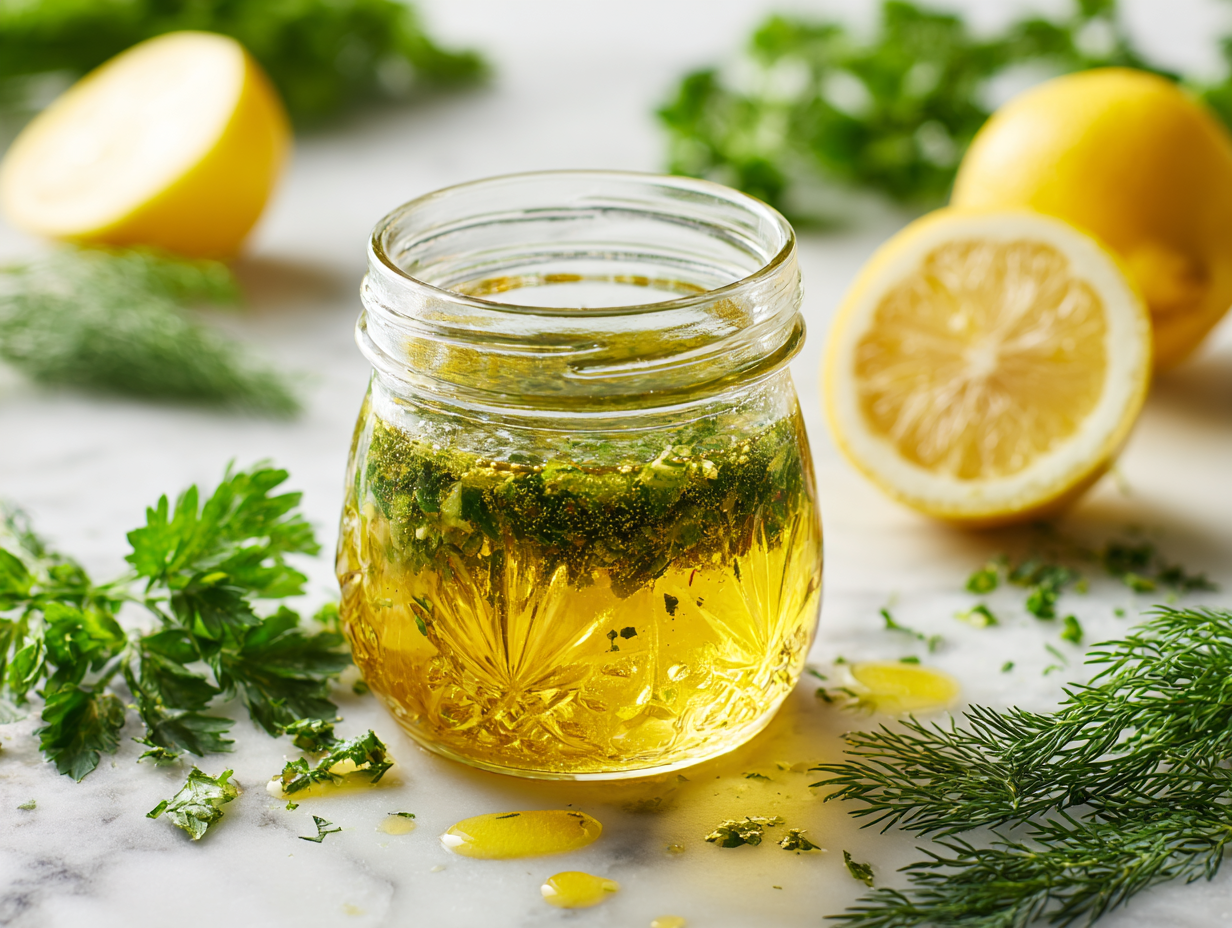

Lemon Herb Vinaigrette
Ingredients
Equipment
Method
- Zest and juice the lemons.
- Finely chop the parsley, basil, and dill. Grate the garlic.
- In a bowl or jar, whisk together the lemon juice, lemon zest, Dijon mustard, garlic, honey, salt, and black pepper.
- Slowly drizzle in the olive oil while whisking until the vinaigrette looks slightly thickened and smooth.
- Stir in the chopped herbs.
- Add 1 tablespoon water if needed to loosen the dressing. Add the second tablespoon only if needed.
- Taste and adjust with more salt, lemon juice, or honey.
- Serve right away or refrigerate in a sealed jar for up to 5 days.