
Shrimp Fajita Bowls bring that sizzling fajita feeling to your table in one colorful, build-your-own dinner. I make Shrimp Fajita Bowls when I want big flavor without a long prep list, because shrimp cook quickly and peppers turn sweet and smoky in minutes.
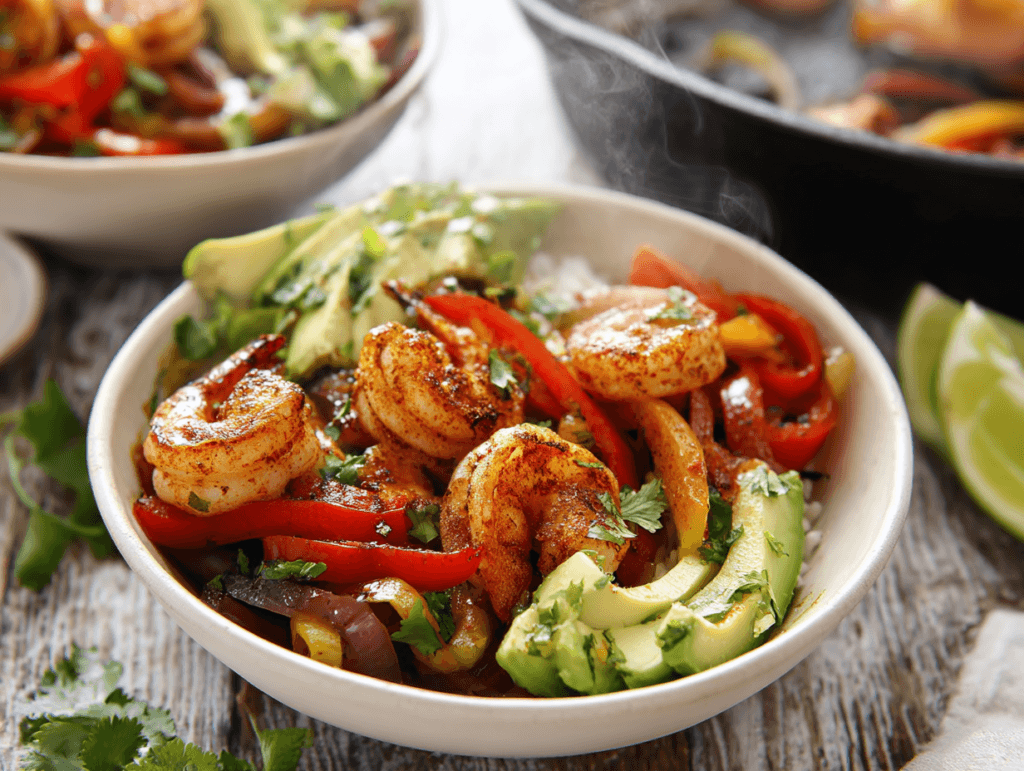
Also, these bowls fit real life: you can pile everything over rice, cauliflower rice, or greens, and you can switch the same filling into tortillas when the mood hits. Throughout this guide, I’ll show you how to get a bold skillet sear, how to keep shrimp juicy, and how to make Shrimp Fajita Bowls work for paleo-style plates, meal prep, and fajita night.
Table of Contents
Table of Contents
Why Shrimp Fajita Bowls Taste Like Real Fajitas
The fajita flavor formula you can repeat
Shrimp Fajita Bowls taste right when you build them around three moves: high heat, a spice blend with depth, and a finishing pop of acid. First, heat drives browning, and browning drives that smoky, restaurant-style bite. So, you want a hot pan before peppers hit the surface. Next, you want spices that bring warmth and color without turning bitter. I reach for chili powder, cumin, smoked paprika, garlic powder, onion powder, salt, and black pepper. Then, I finish with lime juice, because lime brightens everything and keeps the flavors sharp.
Also, you’ll get better texture when you cook vegetables and shrimp in two rounds. Peppers and onions need time to soften and char, while shrimp need only a quick sear. If you cook them together from the start, you’ll overcook shrimp or under-char the vegetables. So, I always cook veggies first, then shrimp, then I toss everything together at the end.
If you love bowls with Tex-Mex energy, you can borrow topping ideas from my turkey taco rice bowls, because the same “spiced protein + fresh toppings” rhythm works perfectly here.
My Marrakesh-to-San-Diego skillet story
My name is Samiya El Khoury. I was born in Marrakesh, Morocco, and now I cook in sunny San Diego, California. Food has always been my love language, and I learned early that heat and aroma matter as much as ingredients. In my grandmother’s kitchen, cumin and cinnamon hit warm metal first, and the air changed instantly. So, when I started testing Shrimp Fajita Bowls in the U.S., I chased that same moment—the one where the kitchen smells like dinner before you even taste it.
One night, I felt homesick and hungry, so I grabbed a cast iron skillet and sliced peppers into long strips. I let them sit just long enough to brown, then I stirred and listened to that steady sizzle. Next, I added shrimp with a quick spice toss, and they turned pink fast. After that, I built bowls with rice, avocado, and lime, and I got comfort plus a little spark. Now I make Shrimp Fajita Bowls when I want something bold, flexible, and genuinely fun to eat. And if you want another quick shrimp dinner with bright flavor, my lemon pepper shrimp orzo gives you that same fast payoff on busy nights.
Ingredients for Shrimp Fajita Bowls
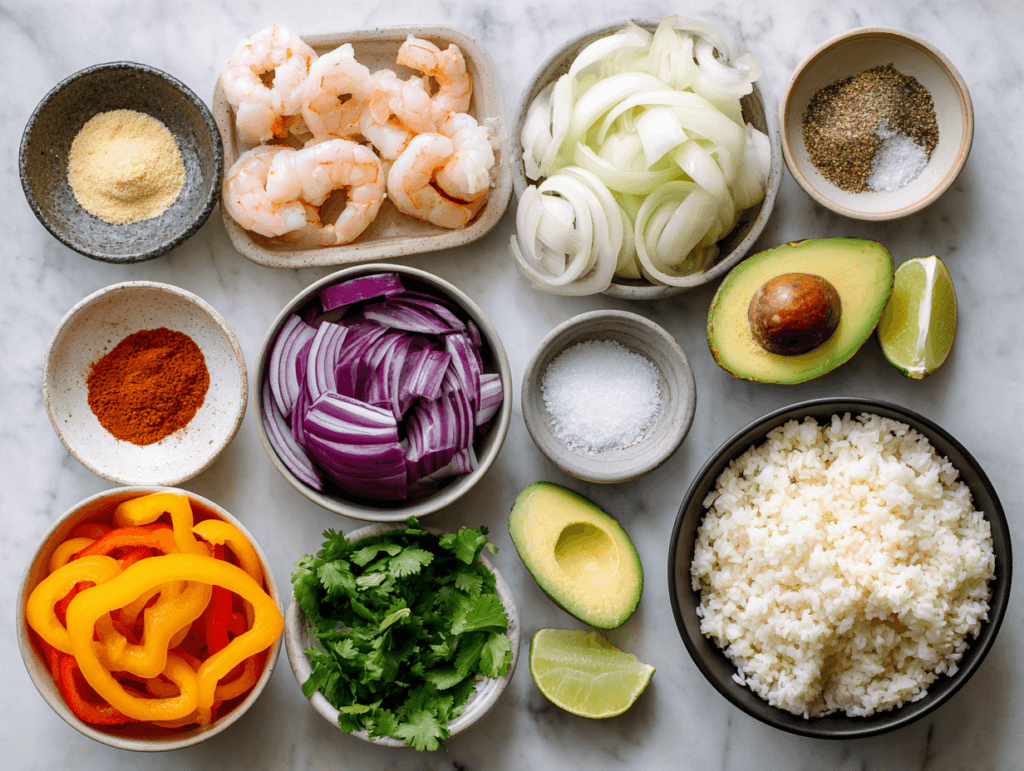
Core ingredients
Use this list as your base, then adjust the bowl to your cravings.
For the fajita shrimp and veggies
- 1 ¼ lb large shrimp (raw, peeled and deveined, or see prep tips below)
- 3 bell peppers, sliced (mix colors)
- 1 large yellow onion, sliced
- 2 tbsp avocado oil or olive oil, divided
- 2 tsp chili powder
- 1 tsp ground cumin
- 1 tsp smoked paprika
- 1 tsp garlic powder
- ½ tsp onion powder
- ¾ tsp fine salt (adjust to taste)
- ¼ tsp black pepper
- 1 lime (half for cooking, half for serving)
For building bowls
- Cooked rice, cilantro-lime rice, cauliflower rice, or chopped romaine
- Black beans and corn (optional if you want a classic bowl build)
- Avocado slices
- Pico de gallo or salsa
- Cilantro
- Jalapeño (optional)
- Greek yogurt or sour cream (optional)
- Shredded cheese (optional)
Smart swaps for paleo-style, low carb, and pantry fixes
Shrimp Fajita Bowls adapt easily, so you can keep flavor high even when your fridge looks random.
- For a paleo-style bowl: use cauliflower rice or greens, skip beans and corn, and top with avocado, salsa, and cilantro.
- For dairy-free: skip sour cream and cheese, then add extra guacamole or a drizzle of olive oil and lime.
- For low carb: go heavy on peppers and onions, then serve over shredded lettuce with extra salsa.
- For extra heat: add chipotle powder or a pinch of cayenne.
- For faster prep: buy peeled shrimp, then season and cook right away.
| If you want… | Do this |
|---|---|
| Paleo-style Shrimp Fajita Bowls | Serve over cauliflower rice or greens, skip beans/corn, add avocado + salsa. |
| Extra smoky flavor | Use smoked paprika, keep pan hot, and let peppers brown before stirring. |
| Meal prep bowls | Pack shrimp/veg separate from toppings, then add lime right before eating. |
If you want more weeknight shortcuts, you can pull a topping idea from 2 ingredient salsa chicken tacos, because salsa works as both flavor booster and quick sauce for bowls.
How to Make Shrimp Fajita Bowls
Cast iron timing that gives you the best char
Cast iron helps you get deeper browning, and browning gives Shrimp Fajita Bowls that fajita stand heat. Also, cast iron holds heat well, so it rebounds faster after you add cold veggies or shrimp. However, you can still cook this in stainless steel; just preheat longer and cook in smaller batches.
Key timing tips:
- Pat shrimp dry before seasoning, because water blocks browning.
- Cook peppers and onions first, because they need time.
- Cook shrimp last, because they finish fast.
- Add lime at the end, because heat dulls lime’s brightness.
Step-by-step Shrimp Fajita Bowls (simple and fast)
Follow these steps, and you’ll get juicy shrimp plus sweet, charred veggies.
- Prep the shrimp and veggies. Pat shrimp very dry with paper towels. Slice peppers and onions into long strips.
- Mix the seasoning. In a small bowl, stir chili powder, cumin, smoked paprika, garlic powder, onion powder, salt, and pepper.
- Heat the skillet. Set a cast iron skillet over medium-high heat for 3 minutes. Add 1 tbsp oil and swirl.
- Cook the veggies. Add peppers and onions. Let them sit for 2 minutes before stirring, then cook 5–7 minutes until you see browned edges. Squeeze in a little lime and scrape up the browned bits. Transfer veggies to a plate.
- Season the shrimp. Toss shrimp with the remaining 1 tbsp oil and about 2 tsp seasoning mix (add more to taste).
- Sear the shrimp. Add shrimp to the same hot skillet in one layer. Cook 60–90 seconds per side until shrimp turn pink and firm.
- Finish the fajita mix. Return veggies to the skillet, toss for 30 seconds, then squeeze more lime over the top.
- Build bowls. Add rice (or cauliflower rice/greens) to bowls, spoon shrimp and veggies on top, then add avocado, salsa, cilantro, and any other toppings you love.
Serving Ideas, Fajita Option, and Storage
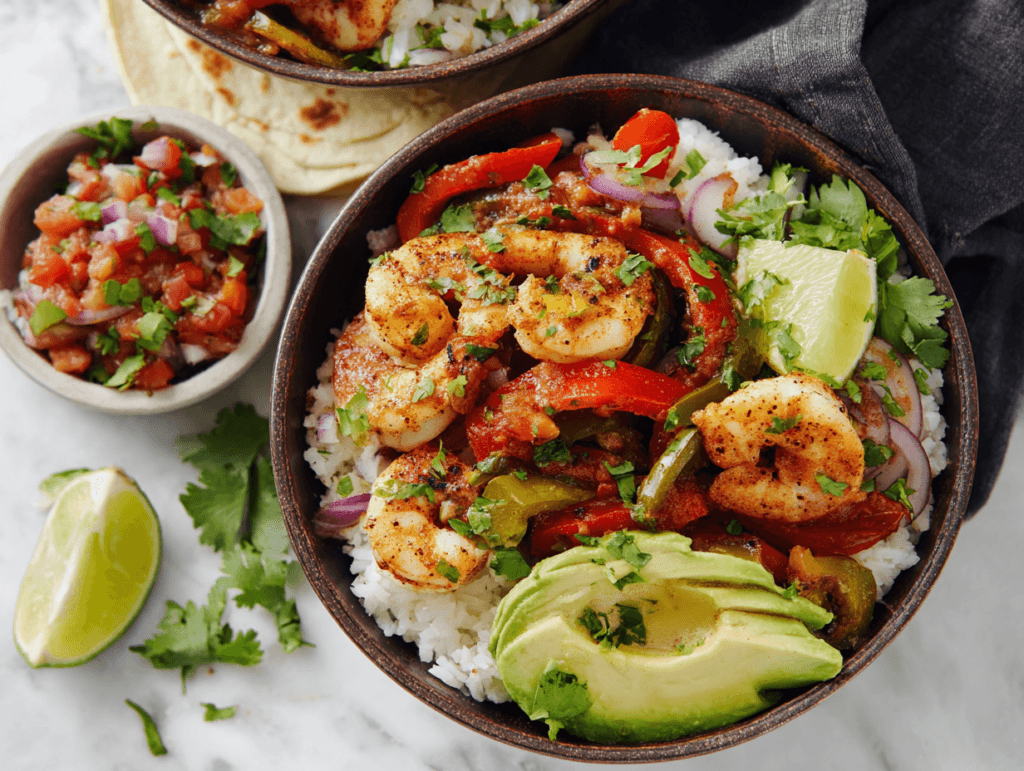
Turn Shrimp Fajita Bowls into fajitas anytime
Yes, you can serve these as fajitas instead of Shrimp Fajita Bowls, and you can do it without changing the recipe. Warm tortillas, then pile shrimp and veggies inside and finish with lime and cilantro.
For the best tortilla experience:
- Warm flour tortillas in a dry skillet for 20–30 seconds per side.
- Warm corn tortillas wrapped in a damp paper towel for 20–30 seconds in the microwave.
- Add shrimp and veggies first, then add toppings last so tortillas stay strong.
Also, if you want the most “fajita sizzle” moment, keep the cast iron hot and bring it to the table carefully on a trivet, then spoon filling straight from the skillet.
Storage and meal prep that keeps shrimp tender
Shrimp taste best the day you cook them, yet you can still prep smart for quick lunches. Store shrimp and veggies in one container and store toppings in another. Then, reheat shrimp gently so it stays tender.
- Refrigerate cooked shrimp and veggies in an airtight container for up to 3 days.
- Reheat in a skillet over medium heat for 2–3 minutes, or microwave in short bursts.
- Add lime and fresh toppings after reheating, because fresh flavor wakes the bowl up.
For food safety and cold storage timing, follow these safe handling and storage tips for shrimp and seafood from Foodsafety.gov.
If you want a paleo-style approach, this Cleveland Clinic guide explains what a paleo-style eating pattern typically includes.
FAQs
Could we serve these as fajitas instead of fajita bowls?
Yes. Cook the shrimp and veggies the same way, then spoon the mixture into warm tortillas. Add salsa, avocado, and cilantro last so tortillas stay sturdy and the flavors taste fresh.
Do I need cast iron for Shrimp Fajita Bowls?
You don’t need cast iron, yet cast iron helps you brown peppers faster and hold heat better. Use stainless steel if you prefer it, then preheat longer and avoid overcrowding so the pan stays hot.
How do I peel and devein shrimp quickly?
Start with thawed shrimp. Twist off the head if it’s attached. Next, peel off the shell, then pull off the tail if you want. After that, run a small paring knife along the back and lift out the dark vein with the knife tip. Rinse quickly, then pat very dry so shrimp sear well.
Are Shrimp Fajita Bowls paleo?
They can be. Serve shrimp and veggies over cauliflower rice or greens, skip beans, corn, and dairy, and top with avocado, salsa, and cilantro. Also, check your chili powder for added sugar if you follow a stricter paleo approach.
Conclusion
Shrimp Fajita Bowls give you big fajita flavor with weeknight speed. Because shrimp cook fast and peppers caramelize quickly, you can get a smoky, satisfying dinner without turning cooking into a project. Also, you can switch the same filling into tortillas for fajitas, or you can build a paleo-style bowl with cauliflower rice and fresh toppings. Keep your skillet hot, cook veggies first, and sear shrimp last. Then finish with lime and cilantro, and you’ll taste that bright, sizzling fajita feeling in every bite.
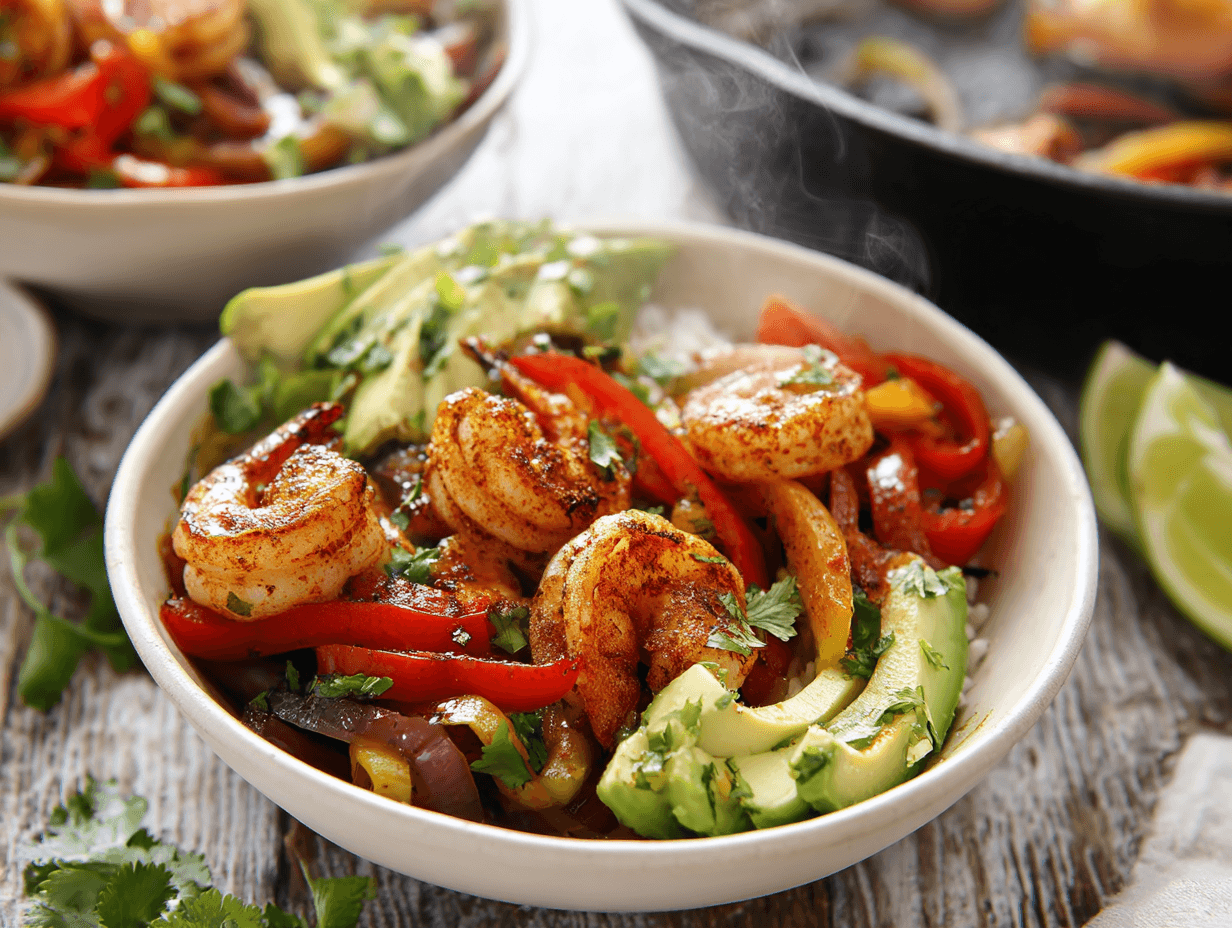

Shrimp Fajita Bowls
Ingredients
Equipment
Method
- Pat shrimp very dry with paper towels. Slice peppers and onion into strips.
- Mix chili powder, cumin, smoked paprika, garlic powder, onion powder, salt, and pepper in a small bowl.
- Heat a cast iron skillet over medium-high heat for 3 minutes. Add 1 tbsp oil.
- Add peppers and onion. Let them sit 2 minutes before stirring, then cook 5–7 minutes until browned at the edges. Squeeze a little lime over the pan, then move veggies to a plate.
- Toss shrimp with remaining 1 tbsp oil and 2–3 tsp of the seasoning mix (use more if you like it bolder).
- Add shrimp to the hot skillet in one layer. Cook 60–90 seconds per side until pink and firm.
- Return veggies to the skillet. Toss 30 seconds. Finish with more lime.
- Build bowls with rice (or cauliflower rice/greens). Top with shrimp and veggies, avocado, salsa, and cilantro. Serve right away.