
I grew up in Marrakesh, Morocco, where my grandmother taught me to taste first and measure later. Because her sauces always carried warmth and balance, I learned to chase “bright plus savory” in every bowl. When I moved to San Diego, California, I kept that habit.
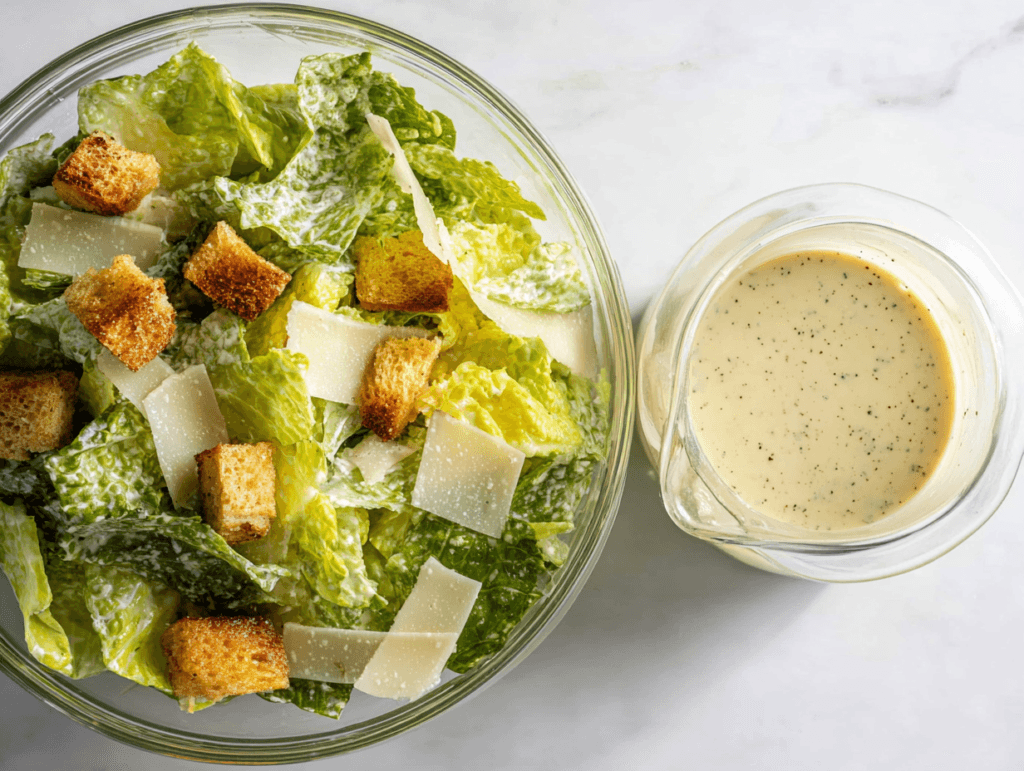
So when friends asked for Caesar salad night, I skipped the bottle and made Authentic Caesar Dressing from scratch. The first whisk felt like home: garlic bite, lemon snap, and Parmesan depth. Plus, the dressing clung to romaine the way a good sauce should. In this guide, you’ll learn what Authentic Caesar Dressing contains, how to whisk it so it turns thick and glossy, and how to use it beyond salad.
Table of Contents
Table of Contents
Authentic Caesar Dressing story and flavor foundation
Why Authentic Caesar Dressing tastes different at home
Authentic Caesar Dressing doesn’t taste sweet, and it doesn’t taste flat. Instead, it tastes sharp, creamy, and savory at the same time. So you need a few classic building blocks: garlic, lemon juice, Dijon, anchovy, Parmesan, egg yolk or mayo, and neutral oil. Because each ingredient plays a clear role, you can taste and adjust fast. Also, you control salt, so the Parmesan shines rather than overwhelms. Also, I learned quickly that Authentic Caesar Dressing loves patience.
So I chop garlic fine, then I let it sit with lemon juice for a minute. Because acid softens that raw edge, the garlic tastes rounder. Meanwhile, I grate Parmesan fresh, since pre-grated cheese often carries a dusty note that dulls the finish. If anchovy scares you, start small. Add half a fillet, whisk, taste, then add more only if you want extra depth. You won’t taste “fish.” Instead, you’ll taste a fuller, almost roasted savor that makes the bowl feel restaurant-worthy.
I keep a small jar ready for busy weeks, and I reach for it the same way I reach for my Caesar dressing when I want a quick lunch. Then, when I want a full meal, I spoon Authentic Caesar Dressing into a wrap with grilled chicken and crunchy romaine, just like my Caesar wrap. That combo feels fresh, yet it still satisfies.
The “original” Caesar idea in one sentence
Caesar dressing started as a simple emulsion built from pantry staples and bold seasoning. So the goal stays the same today: build a thick, clingy dressing that tastes bright first, then savory, then gently salty. Because that order matters, you add acid and aromatics before you add oil. Also, you finish with cheese so you don’t mute the lemon.
What is in traditional Caesar dressing
Traditional ingredients, explained simply
What is in traditional Caesar dressing? You’ll see the same core pieces in most classic versions:
- Garlic for punch
- Lemon juice for tang
- Dijon mustard for bite and stability
- Anchovy or anchovy paste for deep savory flavor
- Egg yolk for richness (or mayo for an easy route)
- Neutral oil for body
- Parmesan for salty, nutty finish
- Black pepper for heat
Because raw egg can worry some cooks, many home versions use mayo. If you choose yolk, follow the FDA guidance on egg safety, and keep the dressing cold.
Smart swaps that keep the classic taste
Sometimes you run out of something, so here are swaps that still keep Authentic Caesar Dressing on track.
| If you need to swap | Use this | Why it works |
|---|---|---|
| Anchovy fillets | Anchovy paste (1–2 tsp) | Same savory depth, faster mixing |
| Egg yolk | Mayo (2–3 tbsp) | Creaminess plus stability |
| Lemon juice | Red wine vinegar (1–2 tsp) | Adds tang when lemons run dry |
Also, if you want a dinner-style Caesar plate, pair the dressing with crispy protein like Chicken tenders or a hearty bowl like Taco salad and use the dressing as a creamy drizzle.
How to make Authentic Caesar Dressing that emulsifies
The whisking order that creates a glossy dressing
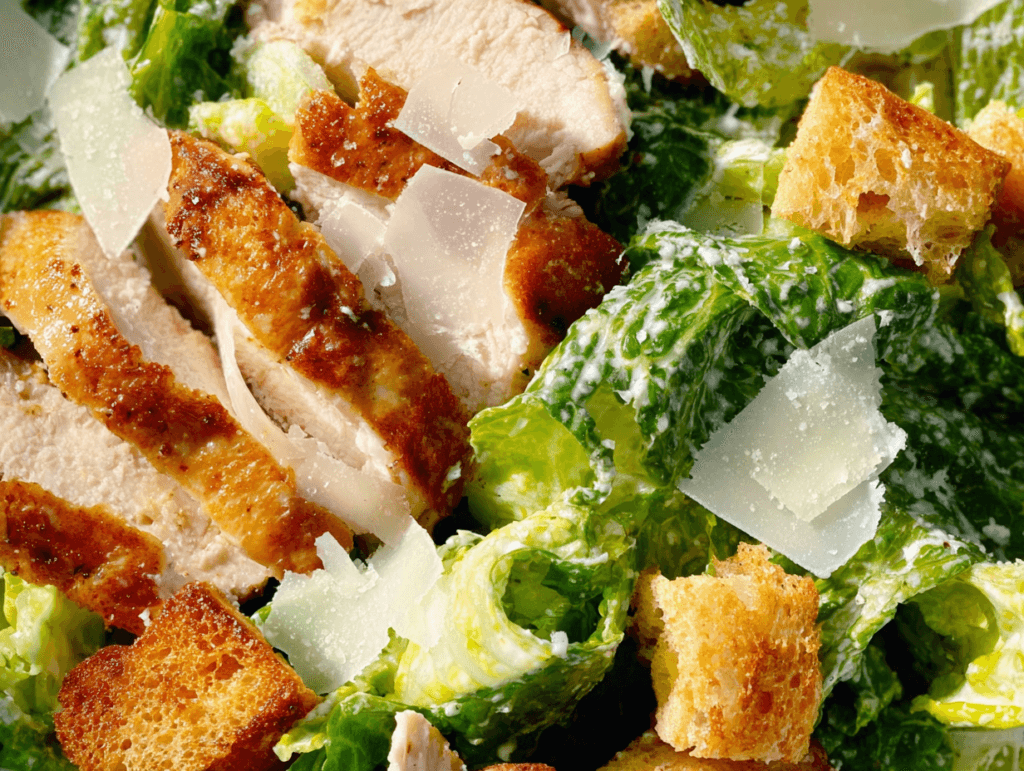
What actually is Caesar dressing? It’s an emulsion, which means oil and watery ingredients stay blended. So start with the base in a bowl: minced garlic, Dijon, lemon juice, anchovy, and egg yolk or mayo. Then whisk until smooth. Next, drizzle oil in a thin stream while you whisk hard. Also, don’t rush the oil. If you dump it in, the dressing turns thin and greasy. So keep the stream slow, and keep your whisk moving in tight circles.
If your arm gets tired, switch to a fork for a minute, then return to the whisk. Because consistency matters, you want the dressing to coat the back of a spoon and hold a clean line when you swipe a finger through it. Because the stream stays thin, the dressing thickens instead of splitting. Finally, stir in Parmesan and lots of black pepper.
If you cook often, you can build a whole week of meals around this jar. For example, spoon it over roasted vegetables from a Sheet pan dinner, or use it as a finishing sauce for grilled Chicken skewers.
Fixes for common Caesar problems
If the dressing tastes too sharp, add a small pinch of sugar or another spoon of mayo, then whisk again. If it tastes dull, add lemon zest or a few drops of lemon juice. If it tastes too salty, add more oil and lemon together, because balance matters more than “less salt.” If the dressing splits, start a new bowl with a teaspoon of Dijon, then slowly whisk the broken dressing into it.
How to use Authentic Caesar Dressing beyond salad
Best ways to serve it
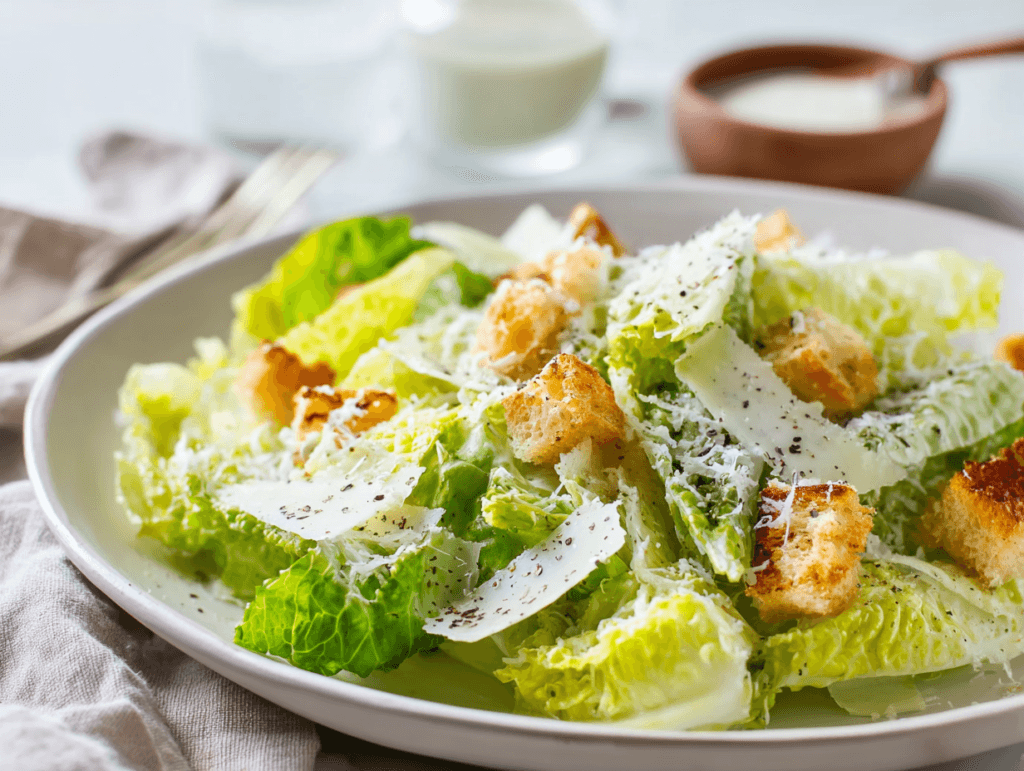
What are the original ingredients of a Caesar salad? Romaine, croutons, Parmesan, and a bold Caesar dressing form the backbone. So keep the salad simple, and let the dressing do the work. Also, toss the romaine with a little dressing first, then add more as needed, because overdressing turns leaves soggy.
Try these serving ideas:
- Brush it on grilled chicken or shrimp
- Spread it inside a sandwich instead of mayo
- Drizzle it over roasted potatoes
- Toss it with kale, then let it sit 5 minutes so it softens
A bright fish dinner loves this flavor too, so pair it with Baked cod and add a small Caesar side. Then, for easy entertaining, set out a build-your-own salad board next to Hummus boards.
Storage and food-safety habits
Store Authentic Caesar Dressing in a sealed jar in the fridge. If you use yolk, plan to finish it within 2 days. If you use mayo, plan for up to 5 days. Also, keep the jar cold while you prep dinner, and return it to the fridge right away. For broader kitchen guidance, follow USDA tips on safe handling.
FAQs
What is in traditional Caesar dressing?
Traditional Caesar dressing includes garlic, lemon juice, anchovy, egg yolk, oil, Parmesan, and black pepper. Many versions also add Dijon and Worcestershire for extra tang and savory depth.
What actually is Caesar dressing?
Caesar dressing is an emulsified sauce. It blends acid, aromatics, and savory ingredients with oil so the result turns creamy and clingy instead of oily.
What are the original ingredients of a Caesar salad?
A classic Caesar salad uses romaine lettuce, croutons, Parmesan, and Caesar dressing. Many tables also add cracked pepper and extra cheese at the end.
What is a really good Caesar dressing?
A really good Caesar dressing tastes bright, then savory, then gently salty. So use fresh lemon, good Parmesan, and enough anchovy for depth, and whisk until it turns glossy.
Conclusion
Authentic Caesar Dressing rewards you when you taste as you go and whisk with confidence. Because the ingredient list stays short, every choice matters, from lemon freshness to cheese quality. Then, when you master the base, add a pinch of smoked paprika or a splash of Worcestershire, and make it your own every time tonight. So keep a jar in your fridge, and use it on salads, wraps, and grilled dinners all week.
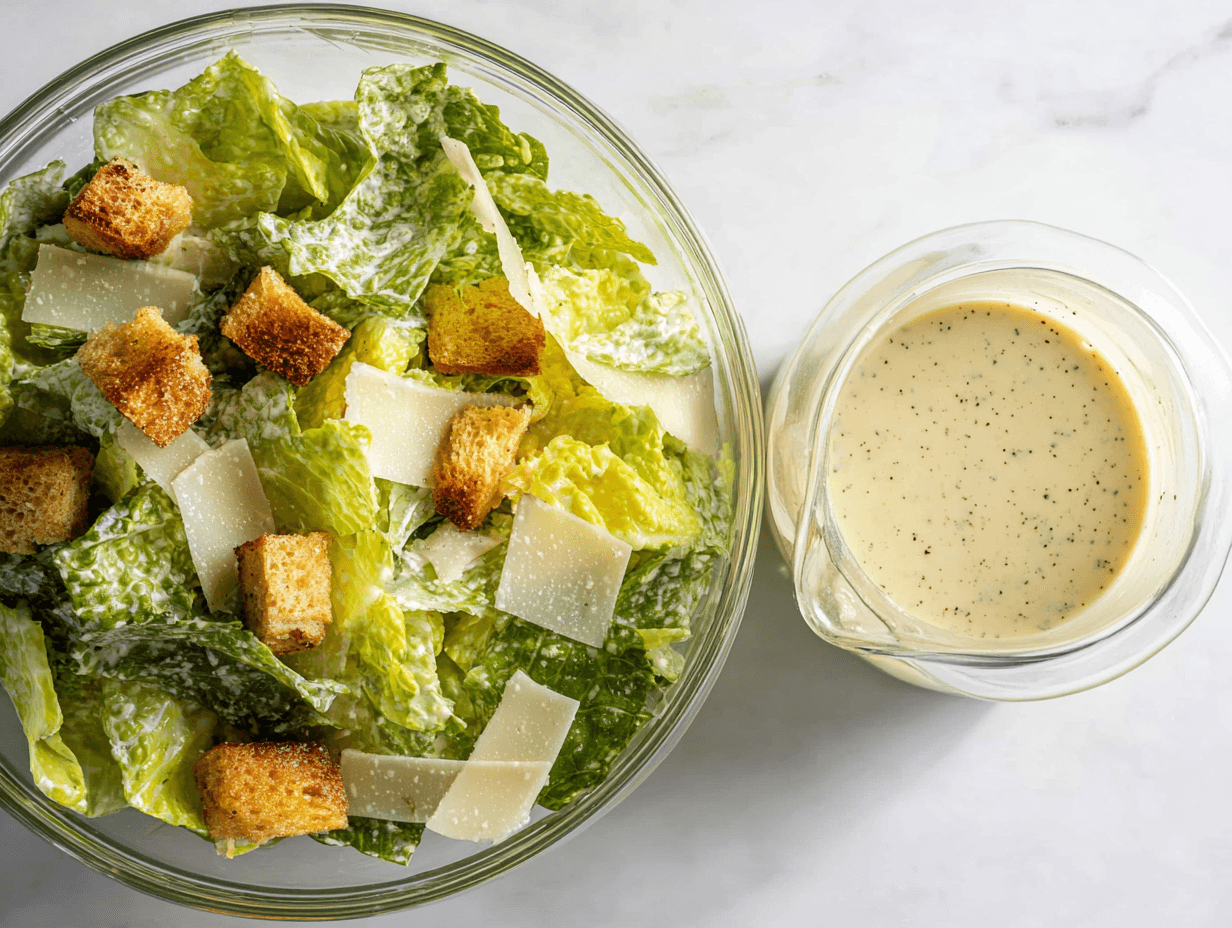

Authentic Caesar Dressing
Ingredients
Equipment
Method
- 1. Whisk garlic, lemon juice, Dijon, anchovy, and mayo until smooth; then drizzle in oil in a thin stream while whisking fast until thick; stir in Parmesan and pepper, taste, and adjust with lemon, cheese, or a pinch of salt.