
Orleans King Cake always feels like a party, even when I bake it on a quiet San Diego afternoon. I grew up in Marrakesh, where my grandmother treated dough like a living thing, and I still carry that habit into every Orleans King Cake I make.
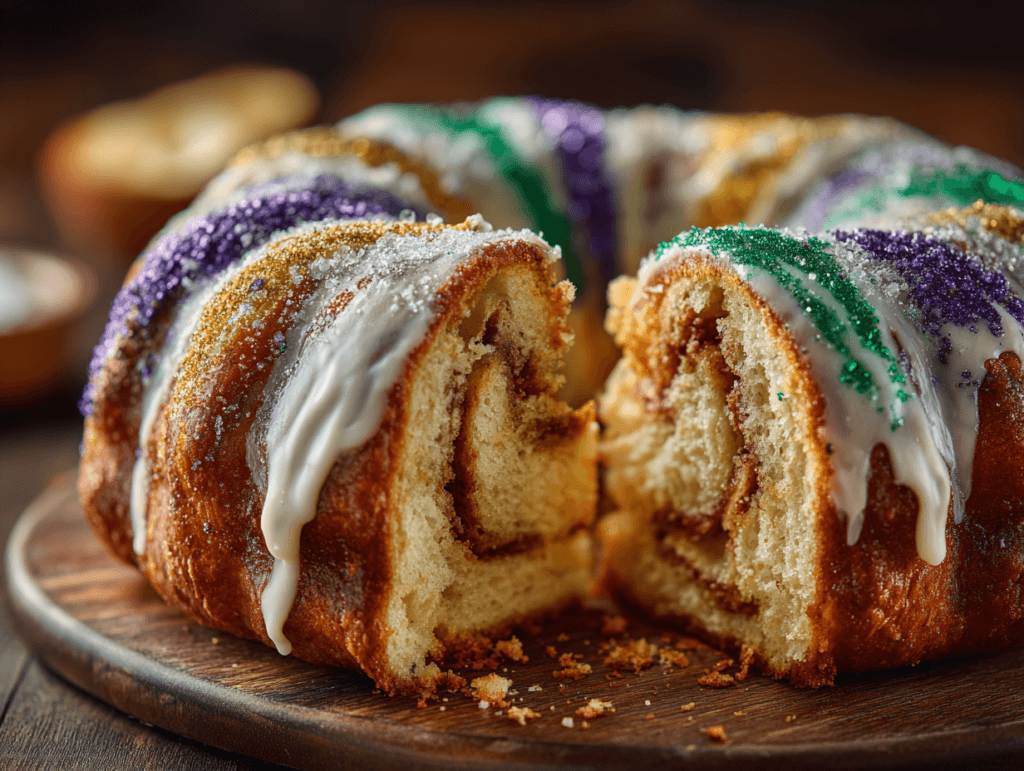
I watch the rise, I smell the sweet yeast, and I keep the filling balanced so the swirl stays tender. In this guide, you’ll learn how to make Orleans King Cake with a soft, pull-apart crumb, a cinnamon-sugar ribbon, and that classic glaze with festive sanding sugar.
Table of Contents
Table of Contents
Orleans King Cake story and what makes it special
Why Orleans King Cake belongs in your kitchen
Orleans King Cake isn’t just dessert. It’s an excuse to gather people, pour coffee, and laugh while you cut the first slice. When I first tried to recreate Orleans King Cake at home, I wanted two things: a dough that stayed fluffy the next day and a filling that tasted warm and nostalgic, not dry or heavy. So I leaned on what I knew from Moroccan baking: gentle warmth, patient timing, and bold spices used with restraint.
Also, Orleans King Cake fits the way many of us bake in the U.S. We want something festive, but we still want a plan we can follow after work or on a weekend. If you like the Mardi Gras vibe in smaller form, you can also check my mini king cake for a quicker bake that still feels special.
What “great texture” looks like for Orleans King Cake
A good Orleans King Cake tears in soft strands, not tight bread chunks. So you want:
- A slightly tacky dough before the first rise
- A full, puffy second rise before baking
- A bake that reaches golden color without drying the swirl
Because flour choices and measuring habits change everything, I recommend learning a simple measuring method and sticking to it. King Arthur Baking shows a clear approach in their how to measure flour video.
Orleans King Cake ingredients and smart swaps
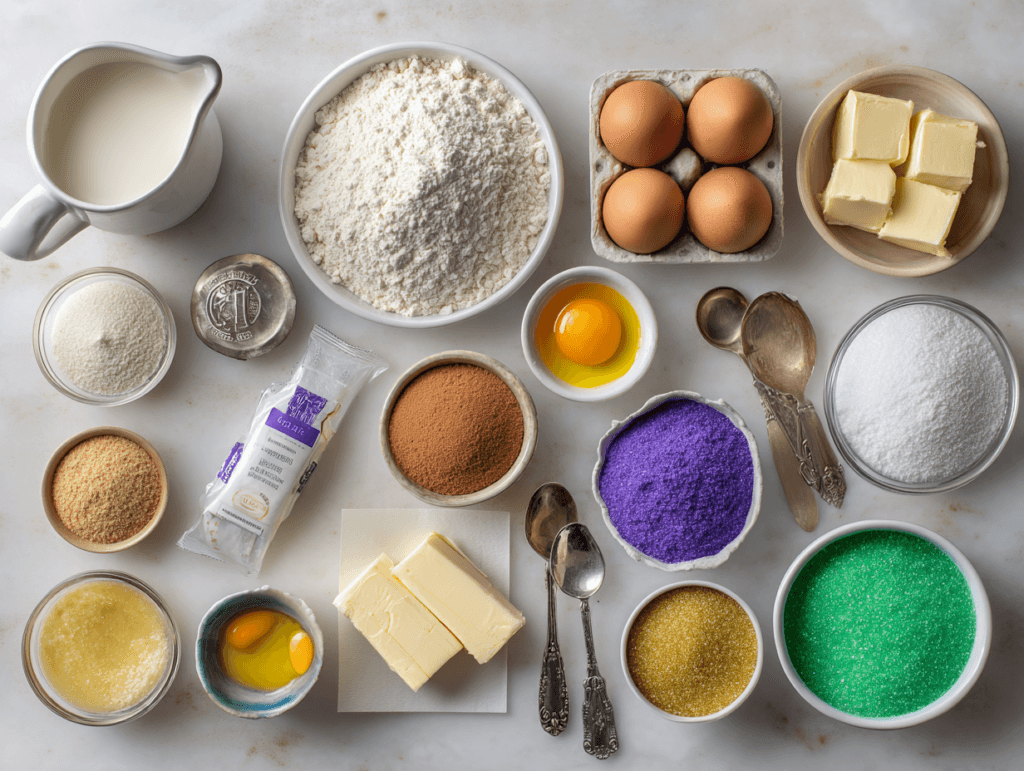
Ingredient list for a classic Orleans King Cake
Use this as your shopping list. Then, keep everything at room temperature so the dough moves faster and rises evenly.
Dough
- 3 1/2 cups all-purpose flour (plus a little extra for shaping)
- 1 packet active dry yeast (2 1/4 tsp)
- 1/2 cup warm milk (about 105°F)
- 1/3 cup granulated sugar
- 2 large eggs
- 1 tsp salt
- 1 tsp vanilla extract
- 6 tbsp unsalted butter, softened
Filling
- 4 tbsp unsalted butter, softened
- 2/3 cup light brown sugar
- 2 tsp ground cinnamon
- Pinch of salt
Glaze + topping
- 1 1/2 cups powdered sugar
- 2–3 tbsp milk (or lemon juice for a brighter glaze)
- 1/2 tsp vanilla extract
- Purple, green, and gold sanding sugar
If you want a dessert spread for a party table, pair Orleans King Cake with something bite-sized like cheesecake bites so guests can sample a few treats without committing to a huge slice right away.
Substitutes that still taste right
You can adjust Orleans King Cake without losing the spirit of it.
- Milk: Use oat milk or almond milk. The dough still rises well when you keep the milk warm, not hot.
- Butter: Use plant-based butter sticks for a dairy-free version, and keep them cool-soft, not melted.
- Eggs: Use a liquid egg replacer designed for baking if you need an egg-free version, and keep the dough slightly wetter.
- Filling twist: Add 1–2 tsp orange zest for a bright note that plays well with cinnamon.
When you work with yeast, you’ll get better results when you understand how rise time, warmth, and kneading interact. King Arthur Baking lays it out clearly in their yeast baking basics guide.
Orleans King Cake step-by-step method
Prep plan so Orleans King Cake feels easy
Before you start, set yourself up for smooth baking.
- Warm the milk to about 105°F. It should feel warm, not hot.
- Set out eggs and butter so they reach room temperature.
- Clear a counter space for rolling and shaping.
- Line a sheet pan with parchment or use a silicone mat.
If you want a low-effort dessert for the same season, keep a “backup plan” recipe in your pocket. I like a simple crowd-pleaser like dump cake when life gets busy but you still want something sweet.
Step-by-step instructions for Orleans King Cake
Follow these steps and you’ll get a soft Orleans King Cake with a clean swirl.
1) Bloom the yeast
- Stir warm milk and 1 tsp sugar in a bowl.
- Sprinkle yeast on top.
- Wait 5–10 minutes until it looks foamy.
2) Mix the dough
- In a large bowl, whisk flour, remaining sugar, and salt.
- Add eggs, vanilla, and bloomed yeast mixture.
- Stir until a shaggy dough forms.
- Add softened butter and keep mixing until the dough looks smoother.
3) Knead until elastic
- Knead by hand 8–10 minutes, or mix with a dough hook 6–8 minutes.
- The dough should feel soft and slightly tacky, not dry.
- If it sticks like glue, add 1 tbsp flour at a time, then stop when it feels workable.
4) First rise
- Put dough in a lightly greased bowl.
- Cover and let it rise until doubled, about 60–90 minutes.
5) Make the filling
- Mix softened butter, brown sugar, cinnamon, and a pinch of salt until spreadable.
6) Roll and fill
- Roll dough into a rectangle, about 10×18 inches.
- Spread filling evenly, leaving a small border.
- Roll tightly from the long side into a log.
7) Shape the ring
- Place the log seam-side down.
- Form a circle and pinch the ends together.
- Transfer to the lined pan.
8) Second rise
- Cover loosely and let the ring puff up, about 30–45 minutes.
9) Bake
- Heat oven to 350°F.
- Bake 25–30 minutes until golden brown.
- If the top browns too fast, tent lightly with foil.
10) Glaze and decorate
- Whisk powdered sugar, milk (or lemon juice), and vanilla until smooth.
- Drizzle glaze over slightly warm cake.
- Sprinkle purple, green, and gold sanding sugar right away.
Here’s a simple timing guide you can follow:
| Stage | Typical Time | What You’re Looking For |
|---|---|---|
| First rise | 60–90 minutes | Dough doubles and feels airy |
| Second rise | 30–45 minutes | Ring looks puffy and lighter |
| Bake | 25–30 minutes | Golden top, set center |
If you want another baking project that slices neatly and travels well, try Valentine banana bread for a sweet loaf that holds up great at potlucks.
Orleans King Cake serving, storage, and variations
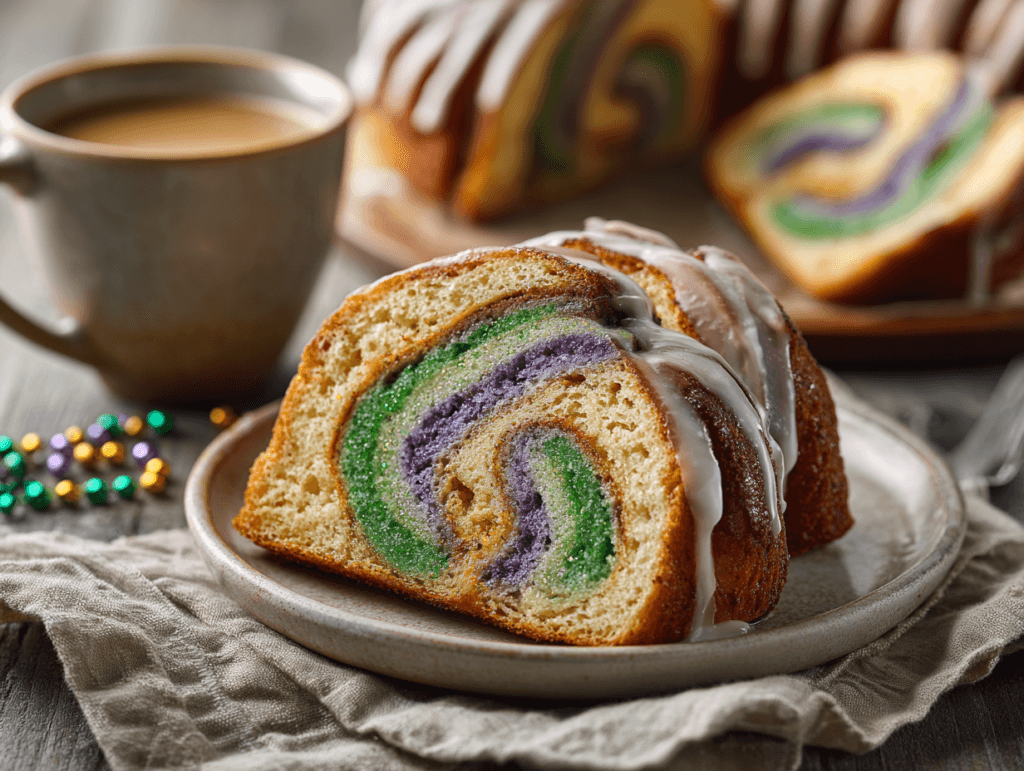
Best ways to serve Orleans King Cake
Orleans King Cake tastes best the day you bake it, when the glaze still has that soft crackle. Serve it like this:
- Slice and serve with coffee or chicory-style coffee
- Add fresh berries for a lighter plate
- Pair with a simple hot chocolate for kids
If you build a dessert table, balance your Orleans King Cake with something chocolatey and easy to grab, like chocolate strawberries.
Storage, reheating, and fun variations
Storage
- Keep Orleans King Cake covered at room temperature up to 2 days.
- For longer storage, wrap slices tightly and freeze up to 2 months.
Reheating
- Warm slices in the microwave for 10–15 seconds.
- Or warm in a 300°F oven for 5–7 minutes.
Variations that still feel like Orleans King Cake
- Cream cheese filling: Mix 6 oz cream cheese with 1/4 cup sugar and 1 tsp vanilla, then spread a thin layer before cinnamon sugar.
- Pecan cinnamon swirl: Add 1/2 cup finely chopped pecans to the filling for crunch.
- Orange-cinnamon glaze: Swap milk for orange juice in the glaze and add a little zest.
If you love classic cookie trays during the same season, add snowball cookies as a snowy, buttery contrast to the cinnamon-rich Orleans King Cake.
FAQs about Orleans King Cake
What’s the difference between a king cake and a cinnamon roll?
Orleans King Cake uses a richer, brioche-like dough and bakes as a ring, then you glaze and decorate it with colored sugar. Cinnamon rolls bake as individual spirals, and they often use a heavier icing.
Why did my Orleans King Cake turn out dry?
Dry Orleans King Cake usually comes from too much flour, overbaking, or a filling layer that runs too thick. Measure flour carefully, bake until golden, and spread filling in a thin, even layer.
Can I make Orleans King Cake ahead of time?
Yes. You can make the dough and let it rise in the fridge overnight. The next day, bring it back to room temperature, shape it, let it rise again, then bake. This approach also deepens flavor.
Do I need to bake a baby inside Orleans King Cake?
No, you don’t need it. If you add a small trinket, place it into the cake after baking from the underside, so you avoid melting issues and keep it food-safe.
Conclusion
Orleans King Cake turns an ordinary day into something festive, and you don’t need a bakery to make it happen. When you keep the dough soft, the filling balanced, and the glaze simple, Orleans King Cake comes out tender and full of warm cinnamon flavor. Bake it for Mardi Gras, share it with friends, and let it remind you that celebration can live right on your countertop. If you try it and want a smaller version next time, start with my mini king cake and build your own tradition from there.
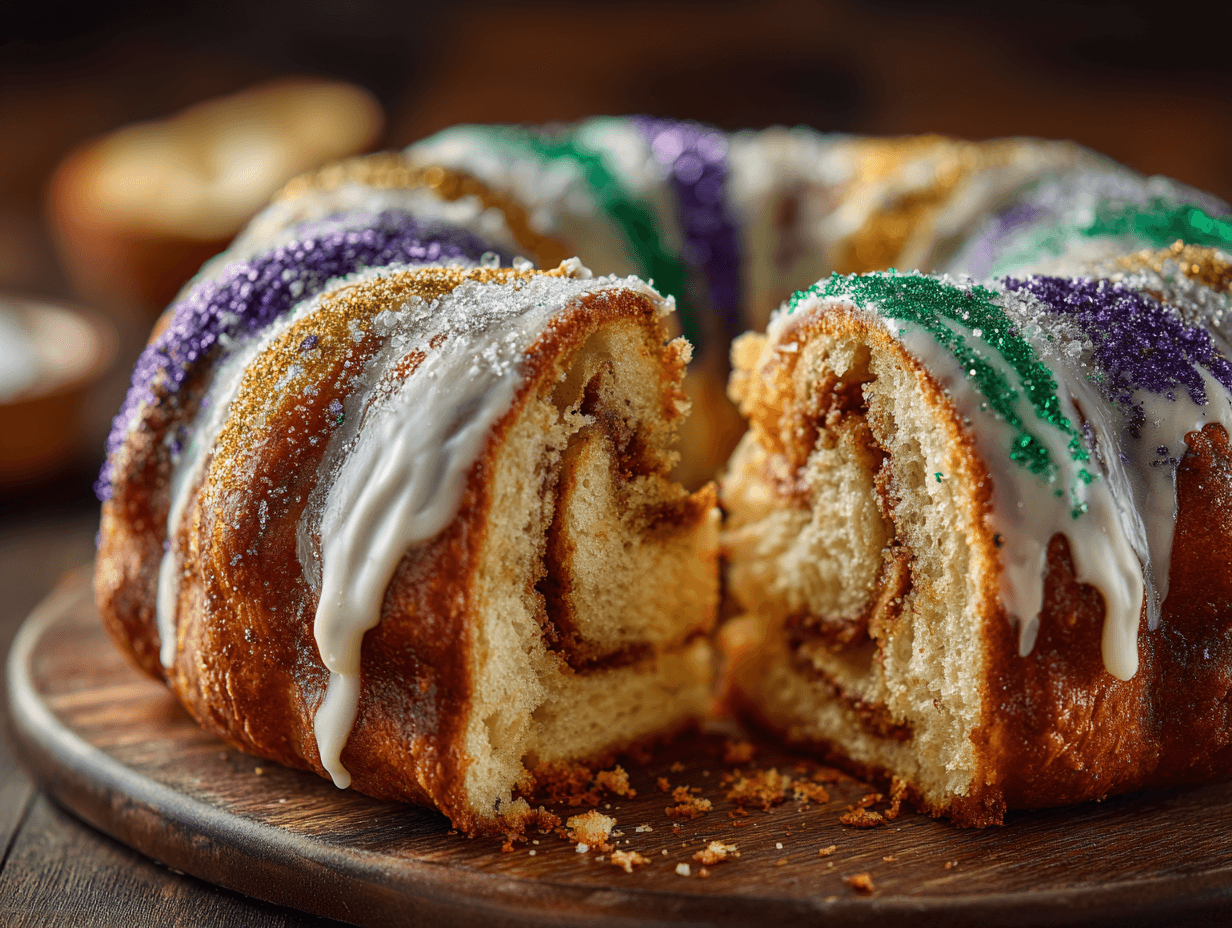

Orleans King Cake
Ingredients
Equipment
Method
- Stir warm milk with 1 tsp sugar, sprinkle yeast on top, and wait 5–10 minutes until foamy.
- Whisk flour, remaining sugar, and salt in a large bowl. Add eggs, vanilla, and yeast mixture; mix to form a shaggy dough.
- Add softened butter and knead until smooth and elastic, 8–10 minutes by hand or 6–8 minutes with a dough hook.
- Place dough in a greased bowl, cover, and let rise until doubled, 60–90 minutes.
- Mix filling ingredients into a spreadable paste.
- Roll dough into a 10×18-inch rectangle. Spread filling evenly, leaving a small border.
- Roll into a tight log from the long side. Shape into a ring, pinch ends together, and place on a lined pan.
- Cover and let rise until puffy, 30–45 minutes.
- Bake at 350°F for 25–30 minutes until golden; tent with foil if browning too fast.
- Whisk glaze ingredients, drizzle over slightly warm cake, then top with purple, green, and gold sanding sugar.