
When I left Marrakesh for San Diego, I brought my spice memories with me. Still, I didn’t expect a salad dressing to make me homesick. One day I tossed crisp romaine with cucumbers, and I reached for a classic Caesar flavor that reminded me of restaurant nights and family tables. I wanted that same garlicky punch, yet I wanted a fully plant-based version I could whisk up anytime.
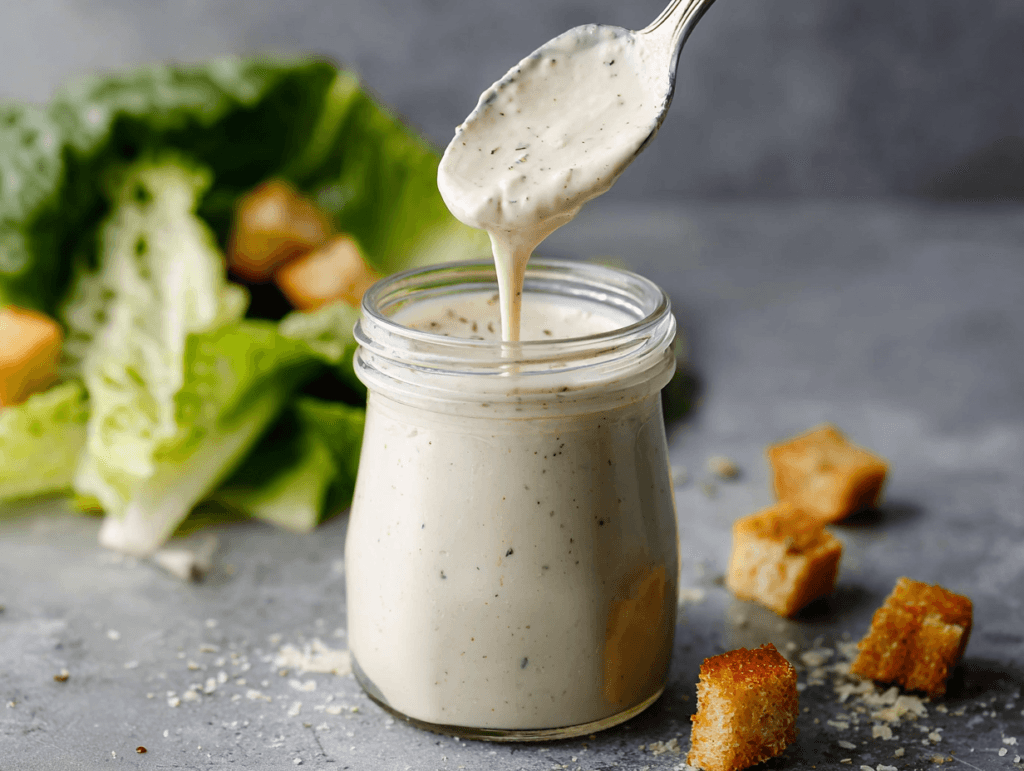
So I tested, tasted, and adjusted until this vegan caesar dressing recipe finally hit the mark: creamy texture, bright lemon, and salty depth. If you’ve tried a vegan caesar dressing recipe that tasted flat, this one fixes that. And if you love a vegan caesar dressing recipe that clings to every leaf, you’ll keep this in your fridge on repeat.
Table of Contents
Table of Contents
What Makes This Vegan Caesar Dressing Taste Like the Real Thing
The classic flavor cues (without anchovies or eggs)
A good Caesar always tastes bold, tangy, and a little “savory-salty.” So this vegan caesar dressing recipe builds those cues with simple plant ingredients:
- Garlic brings the punch.
- Lemon juice brings the bright bite.
- Dijon mustard brings sharpness and balance.
- Nutritional yeast brings a “cheesy” edge.
- Miso or capers bring that salty depth people miss.
If you like comparing styles, you can also peek at Authentic Caesar and 5-minute Caesar to see how traditional versions build the same flavor layers.
Why the texture turns thick and creamy
Texture makes or breaks Caesar. So I use soaked cashews as the main base because they blend into a smooth, rich cream. If you want a different base, silken tofu works too, and sunflower seeds work when you need a nut-free option. Also, water controls thickness fast, so you can go from dip to drizzle in seconds.
| Caesar “Note” | Plant-Based Ingredient | What It Does |
|---|---|---|
| Creamy body | Cashews or silken tofu | Creates thick, smooth texture |
| Cheesy edge | Nutritional yeast | Adds nutty, savory flavor |
| Salty depth | White miso or capers | Brings briny, umami finish |
| Bright tang | Lemon + Dijon | Lifts and sharpens |
Outbound reading (1–3 links total across your post) that adds real value:
- For a quick food safety reference on fridge life, use this food safety storage guidance.
- If you want a deeper ingredient explainer for nutritional yeast, read what is nutritional yeast.
Ingredients for a Vegan Caesar Dressing Recipe
The core ingredient list
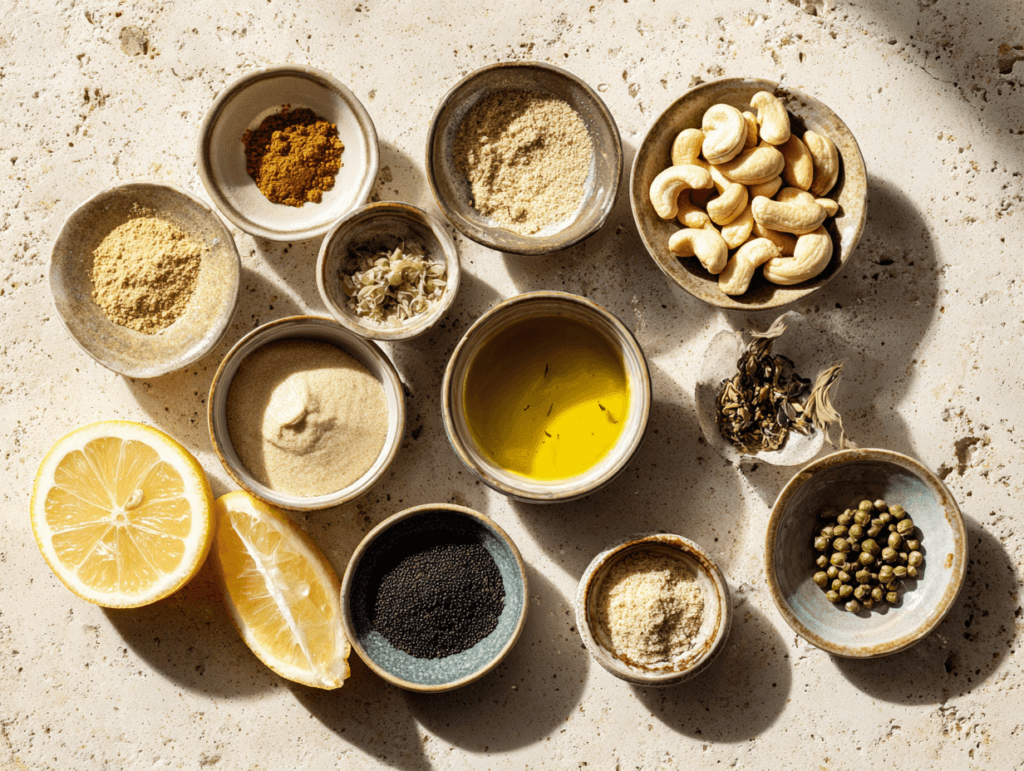
You can make this vegan caesar dressing recipe with pantry basics:
Base
- 3/4 cup raw cashews (soaked 15–30 minutes in hot water, then drained)
- 1/2 cup water (plus more to thin)
Flavor
- 2 tablespoons lemon juice (about 1 lemon)
- 1 tablespoon Dijon mustard
- 2 tablespoons nutritional yeast
- 1 to 2 teaspoons white miso (start small)
- 1 tablespoon capers OR 2 teaspoons caper brine (optional, yet powerful)
- 1 small garlic clove (or 2 for extra bite)
- 1/2 teaspoon black pepper
Balance
- 1/4 teaspoon fine salt (only after tasting; miso varies)
- 1 teaspoon maple syrup (optional, for balance)
Optional “restaurant-style” finish
- 2 tablespoons extra-virgin olive oil (adds gloss and richness)
If you like lighter, tangy Caesar styles, you may also enjoy Greek yogurt Caesar as a reference point for flavor balance, even though it isn’t vegan.
Smart swaps (nut-free, oil-free, soy-free)
Because everyone’s pantry looks different, these swaps keep the dressing creamy:
- Nut-free: swap cashews with 3/4 cup sunflower seeds (soak the same way).
- Oil-free: skip olive oil; add 1–2 tablespoons extra water at the end.
- Soy-free: swap miso with 1 teaspoon caper brine + 1/2 teaspoon extra salt (taste as you go).
- No capers: use 1 teaspoon chopped olives for briny depth.
- No nutritional yeast: add 1 tablespoon tahini and extra lemon; you’ll still get a rich finish.
How to Make Vegan Caesar Dressing Step by Step
Blender method (smooth and thick)
- Soak the cashews. Cover cashews with hot water for 15–30 minutes, then drain. (If you own a high-speed blender, you can shorten the soak, yet soaking still helps.)
- Add everything to the blender. Add soaked cashews, water, lemon juice, Dijon, nutritional yeast, miso, capers (or brine), garlic, pepper, and maple syrup (if using).
- Blend until silky. Blend 45–60 seconds, scrape the sides, then blend again until smooth.
- Adjust texture. Add water 1 tablespoon at a time for a thinner pour.
- Taste and finish. Add salt only after tasting. If you want gloss, blend in olive oil for 5 seconds.
Quick fixes for taste and thickness
If something feels “off,” you can correct it fast:
- Too thick: add water 1 tablespoon at a time.
- Too thin: blend in 2 tablespoons cashews (or 1 tablespoon nutritional yeast).
- Not tangy enough: add 1 teaspoon lemon juice.
- Too sharp: add 1 teaspoon maple syrup or 1 tablespoon cashews.
- Not salty enough: add 1/8 teaspoon salt or 1/2 teaspoon miso.
- Too garlicky: add 2 tablespoons cashews and 1 tablespoon water, then blend.
If you plan to use this in wraps, this pairs perfectly with Caesar wrap as a flavor idea—just swap the filling for chickpeas, tofu, or roasted veggies.
How to Serve, Store, and Use It Beyond Salad
Best ways to use it (more than romaine)
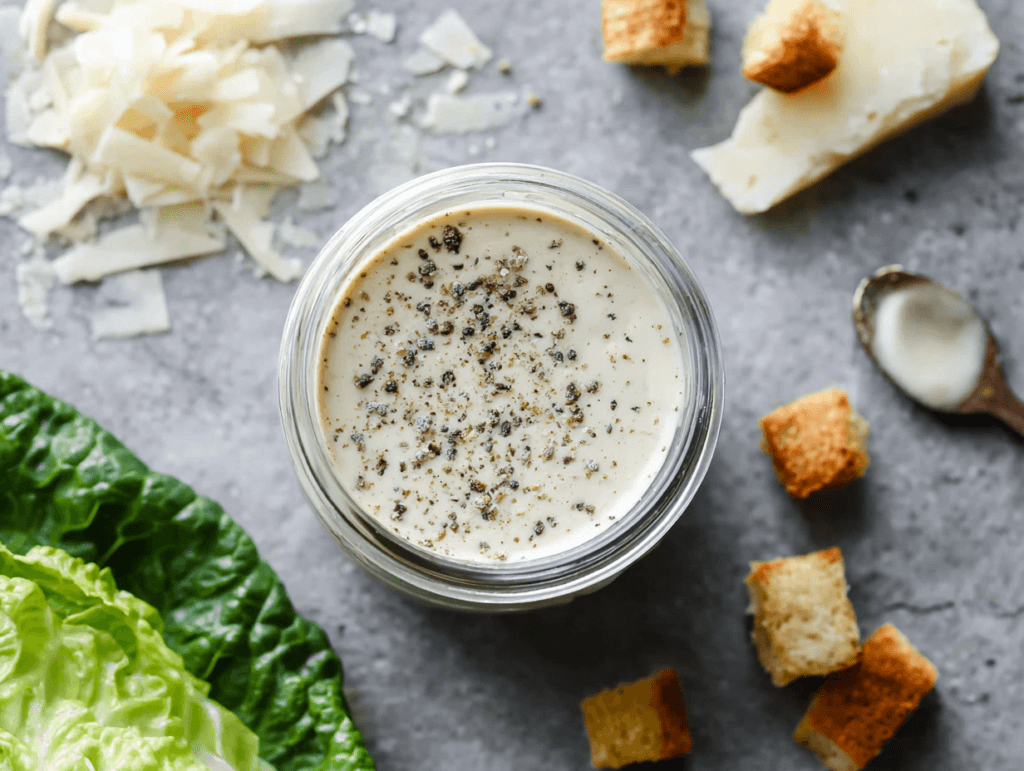
This vegan caesar dressing recipe works anywhere you want creamy, garlicky flavor:
- Toss with romaine, kale, or shredded cabbage.
- Drizzle over roasted cauliflower, broccoli, or potatoes.
- Spread inside wraps and pitas.
- Use as a dip for crudités or crispy chickpeas.
- Thin it, then use it as a pasta sauce shortcut.
For an easy weeknight pairing, I love serving it with a simple soup and a snack plate, so you can link readers naturally to Easy lentil or Snack plate as meal ideas.
Storage and make-ahead tips
- Store in a sealed jar in the fridge for 5–7 days.
- Shake or stir before serving because natural separation can happen.
- If it thickens in the fridge, add a splash of water and stir.
- For food safety timing and storage charts, this food safety storage guidance helps with quick reference.
FAQs About Vegan Caesar Dressing Recipe
Can I make vegan Caesar dressing without cashews?
Yes. Use sunflower seeds for nut-free, or use silken tofu for a smooth base. Then keep the lemon, Dijon, garlic, and nutritional yeast the same so the flavor still tastes like Caesar.
What replaces anchovies in vegan Caesar dressing?
Caper brine, capers, and white miso bring the salty depth people associate with anchovies. You can also add a tiny pinch of seaweed flakes, although miso + capers usually does the job.
Why does my vegan Caesar dressing taste bitter?
Raw garlic can taste harsh, and too much nutritional yeast can read bitter. So start with one small garlic clove, blend fully, then add more only if you want extra bite. Also, taste your lemon—very tart lemons can push bitterness.
How do I thicken vegan Caesar dressing?
Add more cashews (or sunflower seeds), or add an extra tablespoon of nutritional yeast. Blend again, then chill for 30 minutes because chilling also thickens the texture.
Conclusion
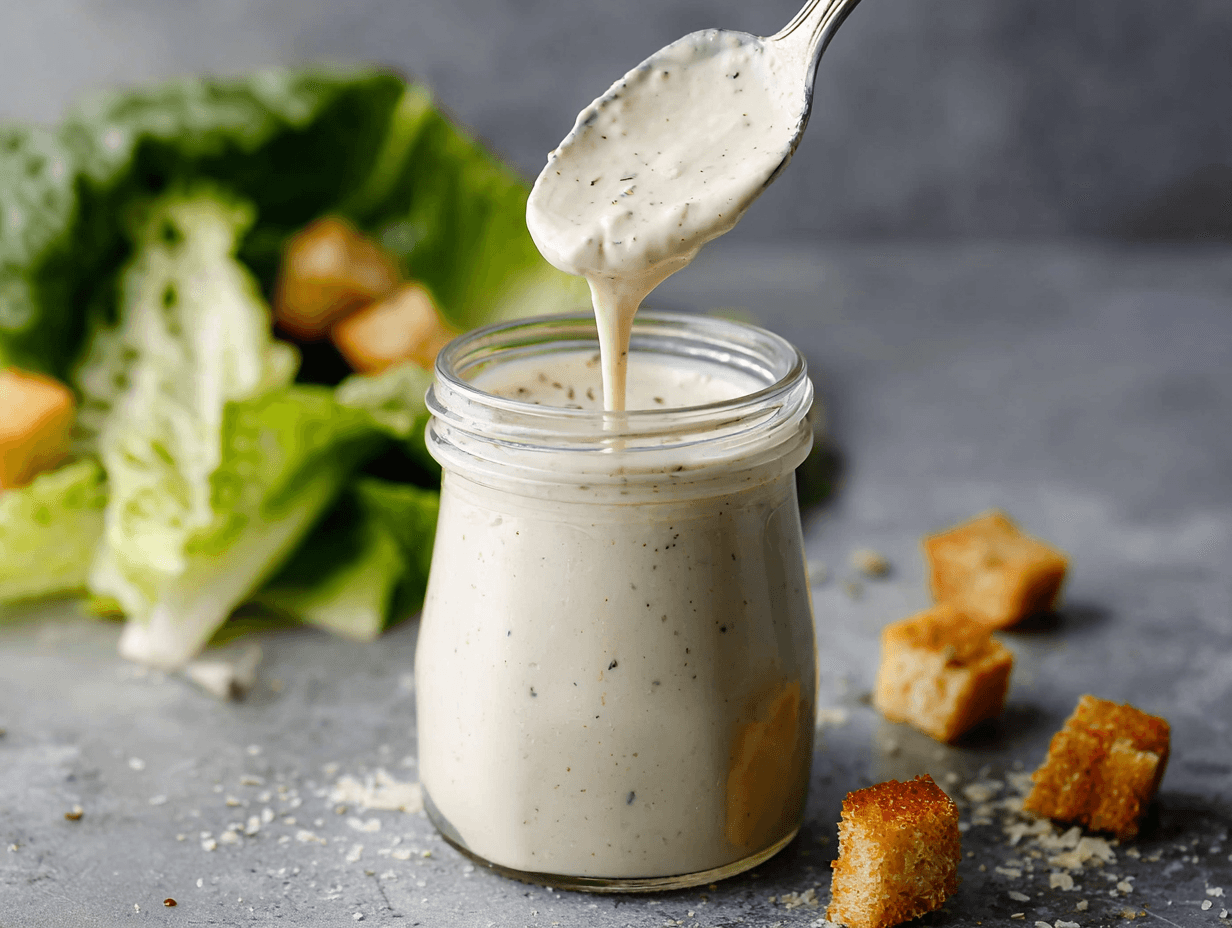
This vegan caesar dressing recipe brings the classic Caesar vibe into a plant-based kitchen: bold garlic, bright lemon, and savory depth with a creamy finish. Because you control the tang, salt, and thickness, you can make it taste exactly how you like. Keep a jar in the fridge, then toss it with greens, drizzle it on roasted veggies, or spread it inside wraps. And when you want more meal ideas that match this flavor profile, link readers toward Fresh tomato or your Caesar-related posts for a smooth reading path.

Vegan Caesar Dressing
Ingredients
Equipment
Method
- Soak cashews in hot water for 15–30 minutes, then drain.
- Add cashews, water, lemon juice, Dijon, nutritional yeast, miso, capers (or brine), garlic, pepper, and maple syrup to a blender.
- Blend 45–60 seconds, scrape sides, then blend again until silky.
- Add water 1 tbsp at a time until you get your preferred thickness.
- Taste, then add salt only as needed. Blend in olive oil for 5 seconds if using.
- Serve right away or chill in a sealed jar. Stir before serving.